Saturday, November 12, 2022

Daily Life Around the Village of La Libertad

After our last post about school and the coca industry, we thought it would be nice to show some of the less intense day-by-day happenings in the village.  Here are photos of life and things around the project's buildings in the village.  At the end of the pictures, we have a video of the only working bike in La Libertad!


Here we are in the kitchen.  To the left are Maria and Gustavo.  On the right are Gilmar and Ben.  Gustavo is the owner and caretaker of the buildings.  Maria and Gilmar are volunteers working with the villagers over the Christmas holiday.  Our project frequently provides free housing to volunteers in the village.


This is our chainsaw.  We mostly use it to cut boards during construction projects.  Occasionally we cut small logs for firewood.  However, we do not loan it to other people, as it has come back to us damaged.  On the anti-kickback bar, next to the front hand hold, is resting a butterfly which is the exact same orange and black color scheme as the saw!


This TV is in the house of our main carpenter, Hernan.  His eight-year-old really likes dinosaurs!  There is no TV air signal or cable in the village.  They buy DVDs in the city of Leticia and everyone shares them.


There are always things to repair and clean around our buildings.  Here Gustavo is holding a flattened, mummified rat that we found under one of the houses.


After a long day of work or a day of school and work, we usually watch a movie or play on the Xbox 360 until the power goes out at 8 pm.  The most popular games are soccer, Call of Duty, and Halo.


Our dog Mowgli!  Almost every house in the village has one or more dogs.  They help with security, hunting, and are fun to play with.


Two more volunteers with our director Ben and three of the students in our scholarship program.  It's really great to have new people in the village.  Volunteers visit families, help with tasks or projects, and have interesting stories and experiences about the outside world to share.


Game day in La Libertad!  On some days we play cards, board games, and even paper-and-pen roleplaying games.  On this day we were playing the board game Carcassonne.  The kids really enjoyed it, playing for over two hours without a break.  We also play chess, risk, and dominoes.  Strategy games are especially well-liked.


During the day the kids may use apps to learn basic reading skills.  But in the evenings they frequently listen to music or funny videos on our tablets or their families' cell phones.  They all use an app called ShareIt to share content.


Here is a picture of the Mother's Day school assembly.  Camilo is the teacher shown to the left.  One of our scholarship students is narrating the Colombian version of the story Stone Soup.


The power in the village frequently goes out.  This may be due to not having enough diesel fuel, mechanical problems with the community's generator, or because of a snake crawling into the generator and causing a short circuit.  Repairs may take from one week to a month or more.  Here is our little backup generator to use when we have no power from the village.  It is enough to power the light for our buildings.


This house raft belongs to the family of one of our scholarship students.  The water level was high at this time.  The change in the water level between the rainy season and the dry season can be as much as 25 feet!  What's fun about this is the obstacle course needed to pass to their house.  One of the boards is like a see-saw that must be crossed.  Only one person at a time can go, as the board lifts out of the water in the back of you after passing!


We bought this bike second-hand in Leticia.  The kids took about a week to sand the rust from it, then we bought a can of spray paint to paint it.  That, new bearings, seat, handlebars, chain, and tires and it was like a new bike!  It was great that the kids learned to do much of the maintenance by themselves.  That way they take more pride in the bike and are more careful with it.  Please enjoy the video below of the kids riding past the guesthouse!


Saturday, October 22, 2022

Education can save a life: School or coca fields and murder rates

What does our organization, Amazon Pueblo, do?  Why do we support students and education?  While our reasons include education enabling the students to have improved work opportunities, more sustainable living conditions, and resistance to corruption, one of the largest parts is to give them the option to stay out of the illicit narcotics industry.

Last week one of our sponsors in the scholarship program sent us an article he read from the October 14, 2022 edition of The Economist, Demand for drugs caused a surge in child labour in Peru.

The article talks about a Princeton University paper that "shows that demand for coca leaves, from which cocaine is produced, pushed a generation of children in Peru out of school and into lives of crime."  The article stated that up to 45% of the labor was being done by children.

During the pandemic, the amount of cocaine produced in our region of the Amazon more than doubled.  Many of the children in the village of La Libertad, from age 10 to around 60, worked in the coca fields to help feed and provide care for their families.

Before the pandemic, more than three-quarters of the villagers' income was tourism related.  All of that stopped with the global health emergency.  

When we delivered food aid to our community from the city of Leticia in 2020, the only boats we saw on the river were transporting people to work in the coca fields across the river in Peru. Each 12-meter wooden boat was overloaded with children and adults.

After arriving in the community we found that one of the brightest students in the scholarship program had been working in the Peruvian coca fields for the past five months.  His school had been physically closed for over a year.  His teacher said he was expected to receive assignments from the internet or text messaging apps.  This was impossible, as the communication system in the area of the village had been nonfunctional for two years.  His in-person classes were scheduled to start again in two months.

We tried to contact him to get him to come back and start school, or at least to live at home and study independently before live classes started.  Other villagers passed messages to him when they returned to our village and then left to work in Peru.  At last, his father went to the fields to tell him that if he did not start school when classes were offered, his scholarship would be given to a different student.  He also said that his sponsors hoped that he would stay in school, and would be disappointed if he dropped out.  He returned home.

His sponsors and the scholarship program were the main reasons he left the coca industry.

The letter Juan wrote to his sponsors after doing his school shopping.

Once in his village, he told me stories about his work picking coca leaves.  While part of what he told me was about mistreatment, he also mentioned the long days of work, being able to eat three meals a day, the friends he made, and how he was happy to be earning the money which his family needed.  Mild chemical burns from fertilizers or pesticides were common.

One of the things which had bothered him the most was when he cut his hand (which he described in graphic detail) with a machete while working.  He treated it himself and hid the wound so the supervisors would not see it.  If they did see it they might have fired him for being careless and sent him home.

While it is a victory that he returned to school, the value of leaving the coca industry is equally or more important.  It can keep the children away from crime and worse criminal behavior as they become adults.  The paper stated that when working in the drug trade, "kids who grew up in coca-growing areas were unusually likely to be imprisoned for murder as adults".  This was noted to be up to a 30% increase!

Juan saying thank you to his sponsors.


The name of the chart used to write the Economist article is one that we hope to stop happening with our students in the scholarship program: “Making a narco: childhood exposure to illegal labour markets and criminal life paths,” by M.M. Sviatschi, July 2022, Econometrica; UN

From Amazon Pueblo, thank you to all of our sponsors and to everyone who has helped us in La Libertad with support for our programs.  Mil Gracias!


Monday, August 1, 2022

Daily life around Leticia, Amazonas, Colombia

Leticia, Amazonas

Here are a few pictures from daily life around Leticia, the capital of the State of Amazonas, in Colombia.  It is located at the frontiers of Colombia, Brazil, and Peru.

Deep in thought over a hamburger!

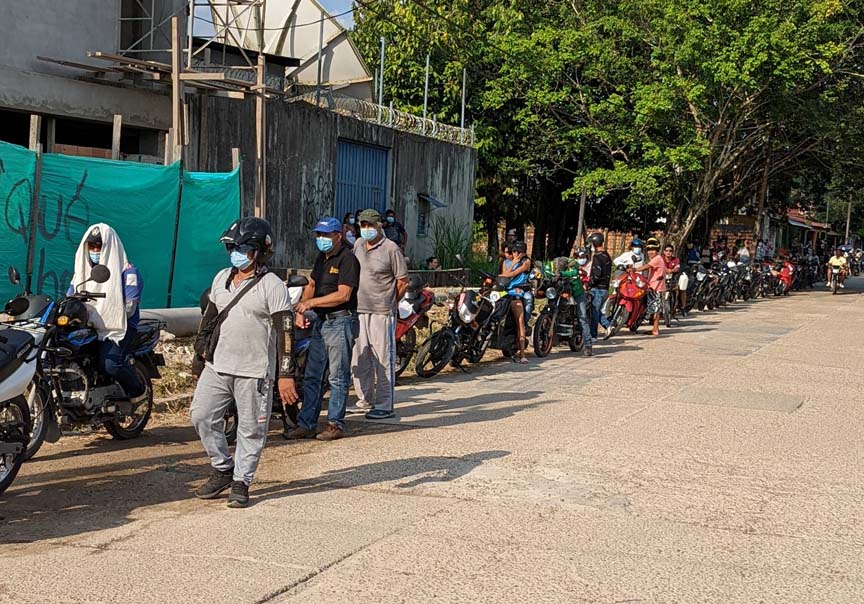
The line for gasoline.  This is for motorcycles.
There is another line for cars!  The wait time can be up to an hour.

Tabatinga, Brazil, across the border from our house.

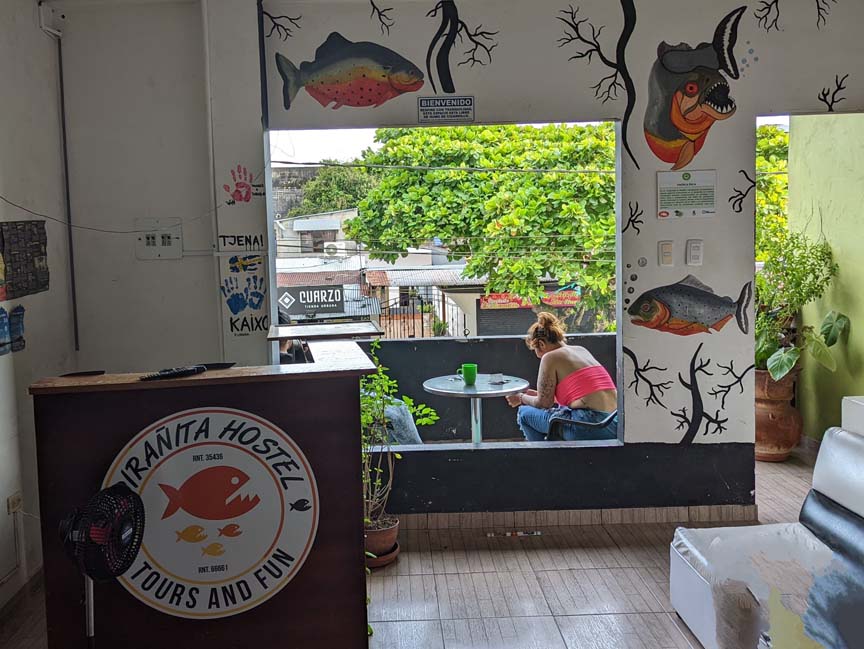
The Piranita hostel.  The owners of this business support our project.

Betty also runs the Piranita dock where we keep our boat in Leticia.
Tortas Malu just delivered her a thank-you cake from us!

One of our scholarship students getting his Covid vaccination
at the local clinic.

This is the Port of Mike.
It is one of the places where we get fruits and vegetables.

Outside of one of our favorite restaurants in Leticia.

The road leading upriver from Leticia has some major problems.

We have posted this before, but it is a great example of a tropical
storm descending on Letica at sunset.


Monday, November 29, 2021

Amazon Pueblo Fall 2021 Newsletter

Amazon Pueblo Fall 2021 Newsletter

While slowed during 2021 because of the pandemic, our mission to support the education of indigenous students in the Amazon goes forward!

In this update we briefly review was has happened since the summer and touch on our plans for the future.

Our director taking notes in the village of La Libertad


Education for the Amazon

Fighting Corruption


When our program director arrived in the village of La Libertad in July he was told that the village students from grades seven to twelve were not going to a regional school in Macedonia, were not being visited by teachers, and had not received any study guides for the past six months.

The students and parents were told that there was no gasoline available to visit La Libertad or to provide any services.  However, the director of the Macedonian school and the teachers were passing the village bi-weekly while they were traveling to the city of Leticia.  They also were continuing to receive their salary.

The director of Amazon Pueblo investigated this problem, spoke with the Secretary of Education in Leticia, who stated that gasoline had been provided during the time our students had no educational services.  With the help of Amazon Pueblo, the community of La Libertad submitted a formal inquiry with the Education Secretary.  Two weeks after this the educational services were restarted in Macedonia.  A formal investigation is now underway into what happened to the gasoline and why the students were not receiving services.

While we are thankful that things have improved, it is of utmost importance that the villagers understand their rights, how to fight corruption and to avoid being taken advantage of.  With proper education, the students will gain this knowledge.


Scholarship Program

School shopping in Leticia

The student program had a difficult time this year, due to the pandemic.  While the younger students had in-person school in La Libertad, it was only for three days per week.  Due to corruption problems, the older students had no educational services.

Additionally, it was very difficult to find all of the students who were in the program during the previous year.  Eight students from 2020 did not continue to receive scholarships.  They were replaced with eight new students.

Four of our older students left the program, not wanting to continue studying in 2022.  They, and many others, left to work in the coca cultivation fields in Peru.  We believe the lack of school (and their need to have money for their families due to the collapse of tourism) directly contributed to their decision to leave La Libertad.

In all, we gave out 35 scholarships for 2021.  This was the most we have ever provided.  It is hoped that all students will be back in school full-time after the new year.


Health Center

The village chief and secretary planning in Leticia


We are planning to start building the health care center during the winter of 2022.  The center will directly improve the health of the students it serves.  Parasites are one of the biggest, and most easily treated, problems that plague the students.  Concentration during classes and homework times is difficult when they are malnourished, have intestinal pain, and various skin irritations from parasites.

Overall, through the health center we will achieve the following five things:

  1. Provide a place for the students and their families to receive basic health care.
  2. Provide a place for medication to be stored.
  3. Provide training to specific members of the community to treat illness and injury.
  4. Provide a secure place for health and community records to be stored.
  5. Provide an office and dormitory for visiting health care providers.


Logistics and Support

Building Repairs

Without constant vigilance, the harsh climatic conditions of the jungle quickly damage our structures and materials.

During the past fall, we repaired and maintained our buildings in La Libertad, including:

  •      Repairing the stairs to the second story building
  •         Repairing the rotted wall and installing waterproofing by our main water tank
  •         Updating parts of the electrical system
  •         Fixing leaking roofs

The repairs by our 2000 liter tank

Solar Panel

One of the most time-consuming tasks of our work was installing a 530-watt solar panel and wiring the kitchen.  It works, but a safe system to switch between village power (available for six hours per day) and our solar system must be installed.  Additionally, three more buildings need to be wired during the winter.  We are installing an electrical grounding system and electrical conduits, which make the job a bit more complicated, but very secure.  Our hope is to one day be completely reliant on solar energy for all of our electrical needs, including refrigeration!

Solar panel equipment

Aluminum Boat

At last, we have a small, six-meter aluminum boat exclusively for the project’s use.  This is lighter, uses less gasoline, is faster, and more stable in the water than our old wooden boat.  It also does not need to be replaced every three years due to rot. 

The first time our boat sees water

Motor Repairs

Our motor is over three years old and was bought used.  However, it is still running well.  We maintain it regularly, change the transmission fluid, and have installed an additional inline fuel filter to help us use the frequently contaminated gasoline found in Leticia.  With continued care, we hope it will last for at least the next year.

Motor repairs in Leticia

 Cell phone signal amplifier

The community of La Libertad has been without reliable cell phone coverage for the past two years.  Before that, we had had a cell phone signal amplifier, but that was struck by lightning during a particularly intense thunderstorm.  After many shipping problems, we expect to receive a new amplifier in December.  Our new installation will include a heavy-duty lightning rod.  When we can connect easily with the outside world, the opportunities for business, safety, and health should be increased.


Cell phone signal amplifier


Fundraising

Craft Fair

We attended the first craft fair since the pandemic started.  It was moderately well-attended.  In all, we made about $550 in profit.  The majority of our sales were from emerald jewelry, but we did sell some handcrafts from the village.


Holiday Craft Fair at the Augusta Civic Center

Emeralds for the Amazon

We are expanding our emerald jewelry offerings to high-quality emerald and gold.  The pictures do not show the beauty, brilliance, and remarkable color of these gems.  The ring was appraised by Chamber’s Jewelers in Thomaston, Maine at $8,550.  The earrings were appraised at $2,750.  Below each image are links to our YouTube page which shows 360-degree videos of the jewelry.  All profits from our jewelry sales go towards the project.


360-degree video of the ring


360-degree video of the earrings


Giving Tuesday


On giving Tuesday (November 30) we started our fundraising efforts for next year.


Sponsor a Student

To continue or to start sponsoring the education of a student please visit our Facebook fundraising page or our Chuffed donation portal.  A donation of $120 will support one student for a year.  Donations of less than $120 will help to support the logistics of the scholarship program.

Scholarship students on their way to school

Build a Health Care Center

By far, our most challenging effort is in building a much-needed health care center to support our students and their families in the village.  In the image below, the boy is suffering from skin and intestinal parasites.  At night the pain is particularly bad.  He frequently woke up crying.  One week after treatment with $1 of ivermectin drops he had remarkable improvement.  He had been suffering for months.  At the time the picture was taken he was 13 months old.  He weighed 12 pounds.

To help us build the health center please visit our Facebookfundraising page or our Chuffed donation portal.  We want to build the foundation, walls, and roof this winter.  Little by little, we hope to continue improving the center until it can meet the basic health care needs of all the students and their families.


Jason


Thank you for reading about our project.  Happy Holidays!


Saturday, June 26, 2021

Return to the Jungle: Our Amazon quest continues

In late July we are returning to the Amazon.  During the pandemic our future was uncertain.  Now we are committed to going enthusiastically forward in our quest for education in the river communities!


Scholarships

We have added eight new scholarships for 2021, bringing our total to 35!  Thank you to all of our patrons for believing in the future of the village children.

Students of La Libertad getting ready for school.

Health Care Center

We have raised funds to start building a small health care center in La Libertad.  While we are short of the total funding we need for the center, we are off to a good start.  The building will be made of concrete and blocks.  This will provide a more permanent structure than the wooden construction that is usually used.

The health care center of Macedonia, five kilometers upriver
from La Libertad.  We would like to build ours in this style.

Projects

Other projects on the slate for this year include:

  • Installing a 600-watt solar power system
  • 24-hour refrigeration for food and medicine
  • Replace our small wooden boat with a slightly larger rot-resistant fiberglass boat
  • Restart our volunteer-led tutoring program
  • Increase our cultivation of cacao and fruit trees


Website

And last, we have a NEW WEBSITE!  It is now fully encrypted with SSL security.  This site focuses directly on our mission.  It uses many pictures to visually describe what we are doing.  Thank you to our many volunteers who contributed the beautiful photos which were used in the creation of the site.


Thank you and please read our blog or Facebook page for the latest news!


Thursday, February 11, 2021

Goodbye to our cargo boat...

 And thank you for all the journeys for which you carried us safely!


Sadly, our 12-meter cargo boat rotted after three and a half years of use on the river.  Wooden boats, even when painted, almost never last past three years.  It had made over 100 trips up and down the river carrying our students, villagers, and supplies for our work in La Libertad.  We also loaned it to other people for cargo work to help the people of Zaragosa and our neighbors across the river in Peru.


The boat was
The boat was made by Israel in the village of Puerto Alegia.  It took about
two weeks to construct.  The boat was first painted with a polyurethane-based 
paint to slow the rot.


We installed a roof on the boat to offer protection against the sun
and rain.  This was a welcome addition but did add a significant amount of
weight and wind resistance to the boat.


Trips in the boat were very comfortable.  We had plastic sheets
that were lowered on the sides during heavy storms.  This protected
our passengers and cargo.  Because of the boat's size and weight, 
it was very stable in the water, even during storms and high waves.


This is the back entrance to La Libertad.  Sometimes, when the
water was high, it was difficult to navigate the smaller jungle
tributaries.  We would often get stuck on underwater wood or 
on overhanging branches.


After two years we resealed and painted the boat.  Six months
before this a tree fell and destroyed the roof on a trip through a
tributary.  Luckily, the roof protected the passengers but was destroyed.


Our last big school shopping trip to Leticia.


The final resting place of our boat, in the back of the village
in the river tributary.

The Future
We have not decided if we will build another cargo boat of wood, upgrade to one of fiberglass, or rent larger boats when we need them for transport.  We still have our smaller, seven-meter wooden boat for transport and light duty.  

Please enjoy this video of one of the trips upriver from the fall of 2019.