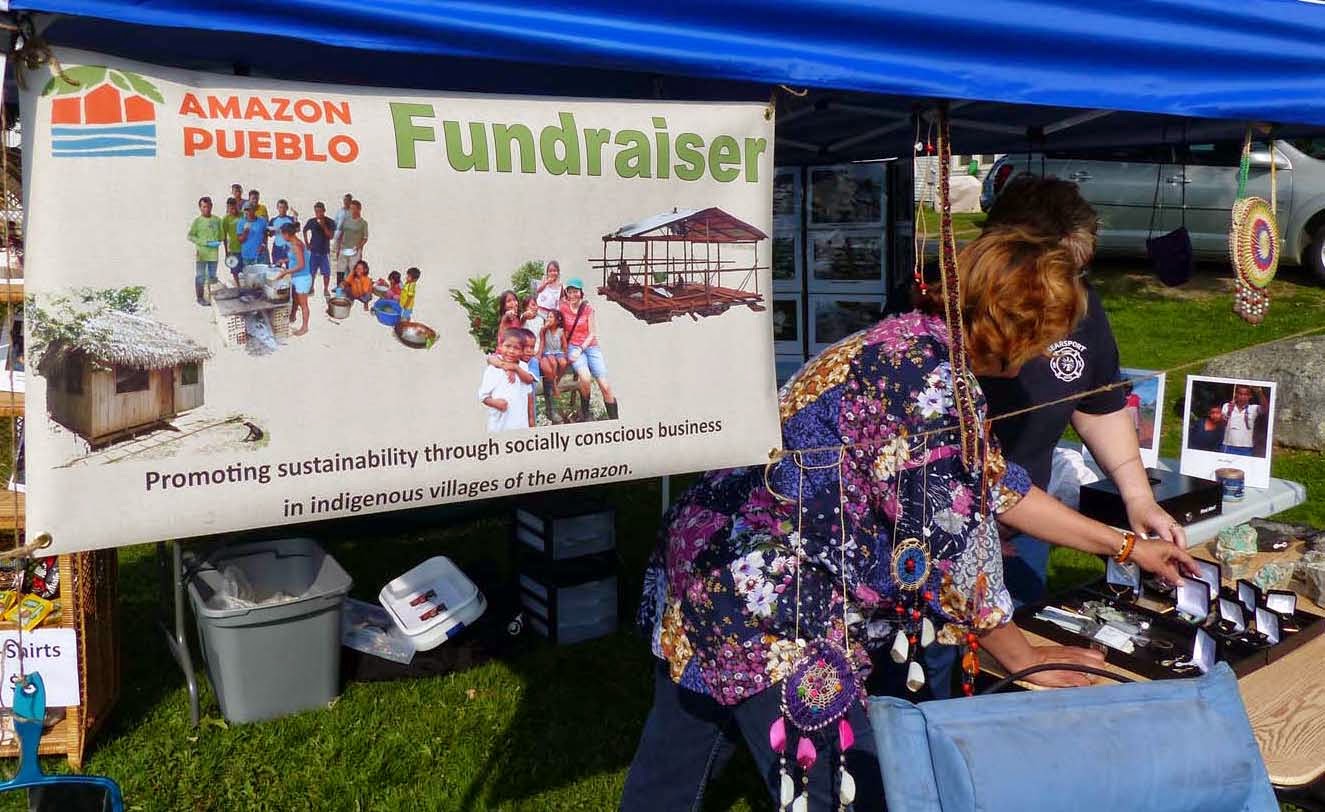
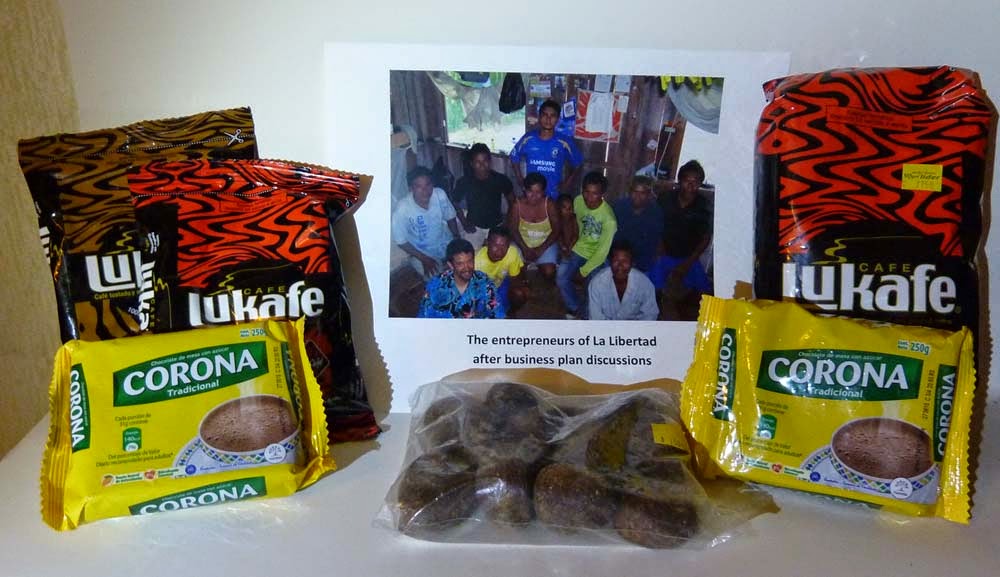
BUYING TRIPS- Do you want to join us for one of our next buying trips in the emerald district of Bogota? I will be making purchases for the project during July 2017. I will be using my emerald filter, scale, and 10X loupe to buy the emeralds. Contact me for costs and logistics info, benangulo@outlook.com 4 SPOTS AVAILABLE FOR THE SPRING 2017 BUYING TRIP!
Why an emerald post?
Many times when I have been describing the work we do in the Amazon and people have perked up when I have mentioned that we sell emeralds in support of the project. “Oh, emeralds…!?”, they question and exclaim. This is usually followed by, “It is my favorite gem.” or “I love the green color.” In this post I will describe the stones, explain why they are valuable, tell how to avoid fake or low quality stones, and give links throughout the story for more in-depth information.
 |
|
Crystal Rough and Cut Emeralds
|
What are emeralds?
Emeralds are crystals from the beryl family of gems. They all have the same basic chemical composition, with only slight variations that change the gem’s color. For example; a light blue beryl crystal is called aquamarine and a red emerald is called bixbite. Wikipedia has a good beryl entry: http://en.wikipedia.org/wiki/Beryl .
 |
|
Different Colors of Beryl Crystals
|

Where are emeralds found?
Emeralds are mined mainly in Colombia, Africa, and Brazil. The vast majority and highest quality emeralds are from Colombia. I am going to discuss only Colombian emeralds in this post.
 |
|
Emerald Producing Regions of the World
|
Colombian emeralds are formed in metamorphic rocks. That means that existing rock deep within the earth was subject to intense heat and pressure. In addition water was present. Cracks within the rock filled with water and dissolved minerals. When this “mineral soup” slowly cooled the emeralds slowly grew. Millions of years later these rocks made their way towards the surface of the earth, where they are mined.
Video of Emerald Fromation Process
The mines in the Boyaca region of Colombia have been producing emeralds for hundreds of years. The indigenous people of the area mined them before the Spaniards arrived. However, most of the mines no longer have the emeralds and have been closed. This has had the effect of making emerald scarcer, hence more expensive.

 |
|
Emerald Mine in Muzo
|
 |
| Emerald Miner |
Emeralds are dangerous to mine and hard to buy in Colombia. First, the mines themselves are dangerous. Cave-ins and accidents are common. The mines, which can be very valuable if they are producing well, are protected by the owners who are, themselves, under the control of an “emerald para-military force”. This force was most recently headed by Victor Carranza. They had an uneasy peace with the Colombian state forces in the region. However, Carranza recently (April, 2013) died. He had survived two assassination attempts and innumerable incidents of violence, but ultimately was taken by lung cancer. Now the para-military forces and sub-leader in the area are trying to violently consolidate their power. There have also been reports of emeralds being used to launder drug money.
 |
|
Victor Carranza
|
My experience in the emerald producing region
During my first year in Colombia (2003) I had an interest in visiting an emerald mine and buying emeralds at wholesale prices. I was teaching science in a private school in Bogota. While wandering in downtown (something a bit risky in itself) I came across a dual-language book about emeralds in Colombia. After reading the book I learned that one of the locations of some of some of the best emerald mines in the world was in Muzo, Colombia. The book said this was only about 100 kilometers from Bogota, about 60?? Miles. I thought, “A couple of hours by bus and I will be there!” I left at 8 am on a Saturday for Muzo. I arrived in the village at 10 pm that night.
 |
|
Me with the Infamous Emerald Book
|
While Muzo, as the crow flies, is only 60 miles from Bogota, mountain ranges separate the two locations. With waiting for busses, asking travel questions when I didn’t speak Spanish, and dealing with washed-out roads, the distance was much greater.
Luckily I was befriended by a very nice woman on the two hours we spent waiting for transportation from a small fleet of Range Rovers to take us on the last part of our trip to the village. She owned a small hotel called Hotel Real in Muzo. She told me that I needed to be very careful in Muzo, and not to travel alone. Once at her hotel I settled in and tried to sleep. Even though I was exhausted sleep came with difficulty, as loud music, drinking, dancing, and yelling was happening in the public square, only a block away from the hotel. I woke up at 7 am. The festivities in the public square were still ongoing, no one having lost their party-spirit! After breakfast the son of the owner helped me look for people selling emeralds. This being a Sunday, all of the shops were closed.
 |
|
Range Rovers to the Rescue
|
To me the village of Muzo seemed to be an outpost of humanity cut from dense Colombian jungle. The temperature during the day was easily in the 90’s, with a swelteringly high humidity. At 10 am I boarded a Range Rover back to Bogota, empty handed. Here is a link to a good article about mining in Muzo: http://thecitypaperbogota.com/features/colombian-emeralds-in-search-of-the-green-fire/ . And a site of beautifully taken pictures of the mines (I guess that is quite subjective), http://www.demotix.com/news/1867870/emerald-mining-colombia#media-1867845 .
 |
|
A Picture I Took while in Muzo
|
After my Muzo experience I returned to Bogota. We had a long weekend, called a puente (bridge), due to one of the many Colombian holidays. This gave me time to rest a bit before starting the school week.
At the time I was teaching science in a private school in the north of Bogota, grades 6 and 8. I happened to tell my students about my adventure in Muzo. My students then proceeded to tell their parents. The parents then told the director of the school. The director of the school called me into her office that Friday to talk with me. At this time I learned what the emerald book did not tell me about emeralds and Muzo.
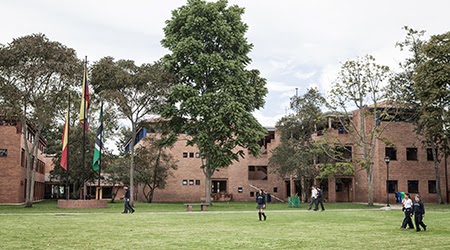 |
| My School in Bogota |
The Muzo region was not totally within government control. Paramilitary groups controlled by the emerald land and mine owners had more power that the governmental forces. Most Colombians without strong ties to the area did not go to Muzo, for fear of their lives. Emeralds were also used to launder money for the drug trade. My director's family owned a villa in the Muzo region that they had not visited in many years. Foreigners in the area risked kidnapping and/or harm.
My director asked me not to go back to Muzo. She said, very politely, that if I did return I would be too much of a rick to myself, and that the school would have to end my contract. If my contract was ended my work visa would be revoked, and I would have to return to the USA. I have not been back to Muzo.
Will I ever return to Muzo? It depends on safety factors. I hear it has been improving, but with the death of Carranza I may have to wait a little longer.
Aren’t emeralds easy to buy in Colombia?
They are actually easy to buy; but it is hard to buy a real, quality gem at a good price. First, the majority of businesses charge high prices to foreigners. While the prices are marked in the stores, Colombians will receive much better discounts off the sticker price.
 |
|
Emerald district in Bogota, Colombia
|
 |
|
Street Dealers in Downtown Bogotá
|

 |
|
My Main Emerald Connection in Colombia
|
 |
|
One of my Favorite Emerald Stores in Bogotá
|
Second, if a person does not know what to look for when judging the quality of an emerald, an inferior grade may be purchased at a high price. I had this problem with my first expensive emerald purchase in Bogota. During my first year in Colombia I met an emerald dealer. He said he had a good piece of rough emerald he could cut and sell me. It was cut, but with a poor quality cut. The color was also a very light green, not as valuable. I paid $500. I later had it appraised in a Colombian jewelry store. They estimated its value at $75. The man I dealt with was very friendly, introduced me to his family, took me to lunch, and overcharged me for an emerald by six times.
 |
| Jose, an Emerald Dealer who Overcharged Me |
How is the quality of an emerald determined?
It would be good at this time to explain some of the points that I mentioned during my story related to pricing emeralds. Many times I have read that a good emerald will be more expensive than a diamond. Why is a good emerald more expensive than a good diamond? The diamond supply is controlled by a few world-wide companies. The diamond supply in the world is very great, however, companies like De Beers keeps millions (yes, millions!) of diamonds locked in their vaults. The diamonds are released slowly to keep the supply down, hence high demand and high cost. With emeralds this manipulation of supply and demand is not the case. Emeralds are scarce. The mines that produce the best quality emeralds are almost exclusively found in Colombia, and these mines are running out.

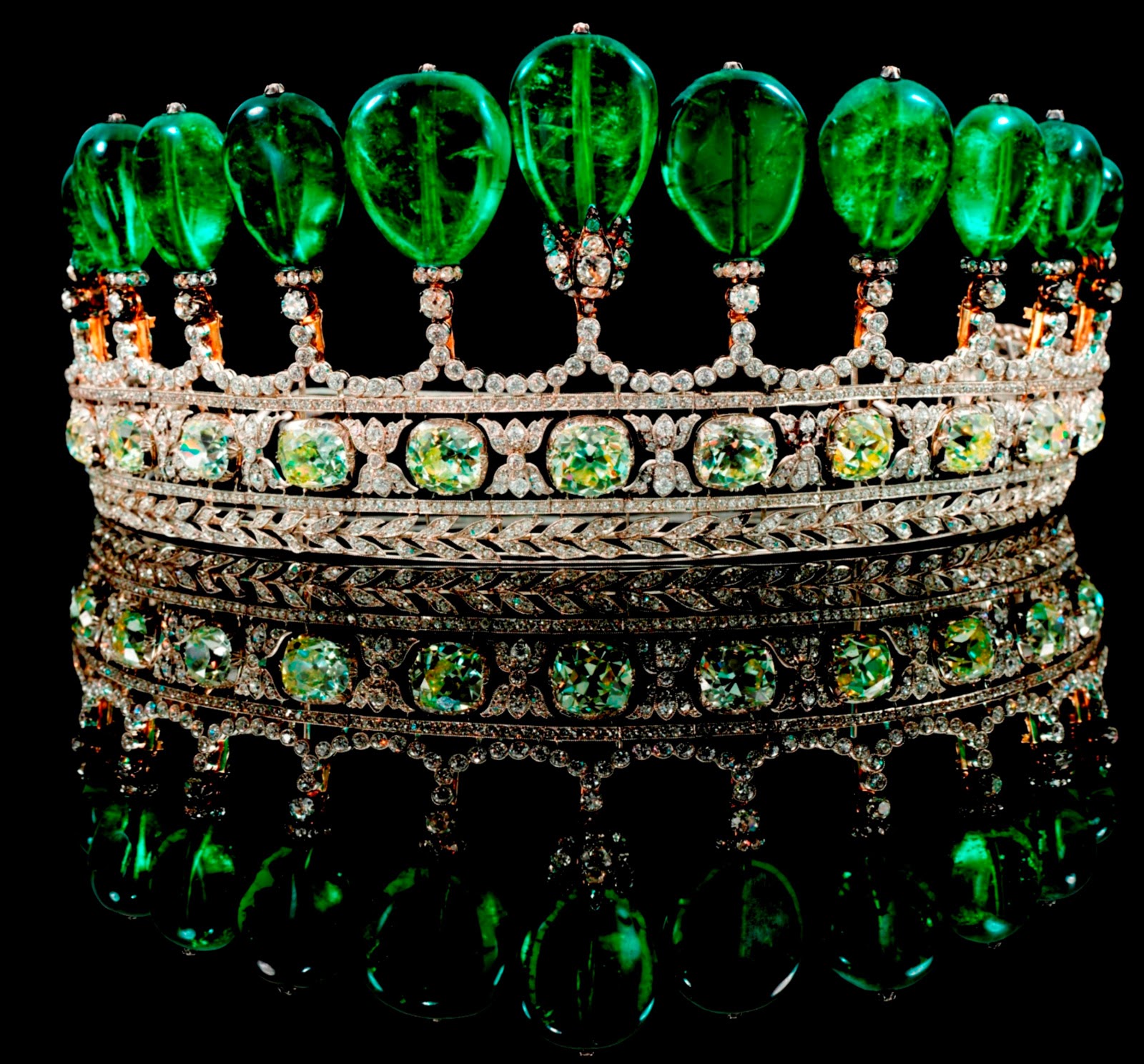
Even when emeralds are found, the quality depends on four properties. These properties include color, the best color being that of new, freshly grown spring grass; cut, a good cut that has straight lines, no chips, and produces a high brilliances with the proper angles of the cut; clarity, which is the amount of transparency found within the stone (inclusions of liquids, gasses, and solids are common within the vast majority of Colombian emeralds); and the weight of the stone, measured in carats. If each of the properties of emeralds is excellent, a price of tens of thousands of dollars per carat can be demanded. The larger the stone of good quality, the more extreme will be the price per carat.
These sites have a good explanation of the values of emeralds: http://legacy.earlham.edu/~loonebr/Emerald.htm, and http://www.singhalinternational.com/tvalue.htm . For expensive examples of emeralds see -http://www.awesomegems.com/emerald-priceguide.html .
 |
|
20 Carat Fine Emeralds (sold for 1,000,000 dollars 10
days after they were cut)
|
Even if a good quality rough emerald is found, emeralds are one of the most difficult stones to cut and set. While an emerald is a “hard” stone, due to the imperfection within the stone (inclusions), it has a high incidence of breakage when being cut or set. It can be a very brittle stone.
Is it a real emerald (butter or Parkay)?
Imitation emeralds, synthetic emeralds, or an undetermined green stone
Even in jewelry stores a gem that is purchased as an emerald may or may not be a true, natural emerald. The stones may be imitation (green glass or even an acrylic), a synthetic (lab created but still a true emerald), or a different semi-precious stone (tourmaline, peridot, or green garnet). A non-authentic emerald may be sold to an uninformed person for hundreds of times its true value.
 |
|
My Collection of Imitation, Synthetic, and Natural Emeralds
|
Tools to authenticate and price emeralds
Various tools are used to identify and grade emeralds. In the image below are the ones that I have. There are others (mainly an expensive refractometer and a very expensive, high quality dark-field binocular microscope), but the ones pictured will work in most cases, are highly portable, and affordable. For very expensive emerald purchases (emeralds with a claimed value of over $1,000 dollars in Bogotá) I take the gems to a reputable lab for authentication and an official estimate.
 |
|
My Tools
|
The tools, starting from left to right with the first row are:
• Tweezers
• 4-pronged tweezers
• 10 times magnifying jeweler’s loupe (Used to look for features in the stone that occur naturally: gas bubbles, black carbon bits, and fractures. A synthetic or artificial stone most likely will not have these features.)
• Broad spectrum flashlight (to illuminate the stones when using a filter)
• Chelsea (emerald) filter (Detects the presence of chromium, which shows up red through the filter. The vast majority of fine Colombian emeralds contain chromium.)
• Calcite dichroscope (Breaks the green light into two distinct shade of green when looking at an emerald. When looking at many other green stones the image will only be of one color green.)
• Spectroscope (Shows the colorful light spectrum “fingerprint” of a substance. Natural emerald has a
• Scale
The back row: Clamp and 40 times magnifying camera (I am experimenting with connecting this to my computer and taking pictures of emeralds under magnification.)

 |
| A Natural Emerald |
 | |
| The Same Emerald Viewed through an Emerald Filter |

Enhancements to Emeralds
If everything before was not enough to cause a person to think twice about an emerald, one more thing must be considered. Almost every single emerald has received some form of treatment to enhance its beauty and value. Small, microscopic cracks are found on the surface of almost ALL emeralds. Fillers (oil, plastics, and resins) are used to fill the cracks. Some treatments are accepted by the gem world (like uncolored cedarwood oil and some resins). Colored oils and resins are not accepted. The tools above can also be used to help detect some forms of enhancement.

A final story
An emerald dealer once told me that an emerald miner tried to sell him a huge chunk of green calcite, which the miner swore was a real emerald. It was green, transparent, and found in an emerald mine, but it was not an emerald. The dealer positively identified the rock as calcite (very easy to do as it caused a double image to be seen when looked through). The miner wanted thousands of dollars for it. He ended up selling it to a different miner, who then sold it again, and then it was traded for a car. The person who had traded it for a car then took the same calcite rock back to the original dealer who identified it as a calcite, who instantly recognize the rock as the one he had seen years earlier.
 |
|
Green Calcite
|
 |
|
Emeralds in Matrix
|
 |
|
2 of my Favorite Things, Emeralds and Fossils!
|
 |
| $12,800,000 Tiara |
 |
|
Natural Emerald Crystals in Matrix
|