Thursday, July 31, 2014

$300 Raised at Searsport Craft Fair!

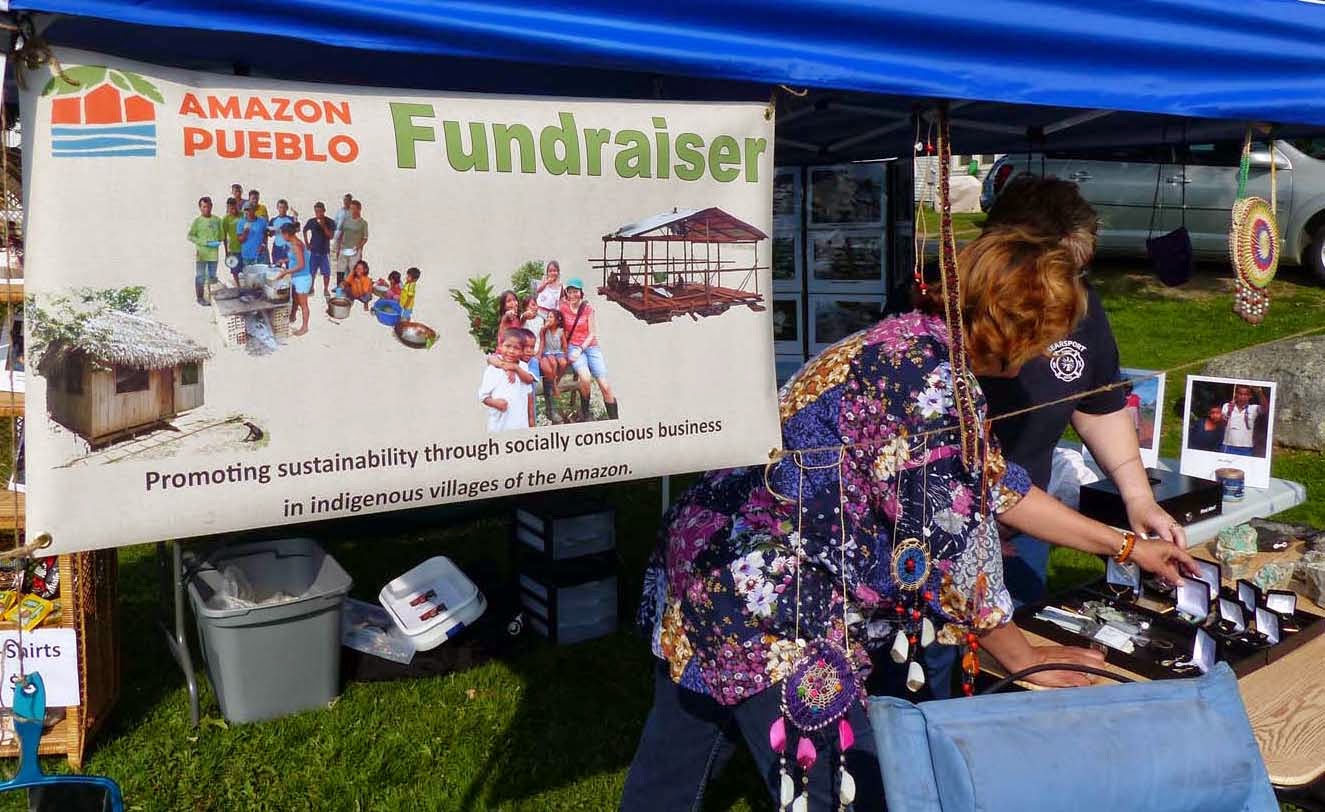
The day was sunny, warm, with a light breeze.  After a one hour drive I arrived at the site in Searsport, Maine.  It overlooked the ocean.  As I steered my car to the side of the road I was greeted by the warm smile of Lisa, the organizer of the craft fair and also a board member of Amazon Pueblo.  Needless to say, we had a prime spot for our booth!

 
We were later joined by Dianne, also a board member, who helped us to complete our setup.

The fair started out slowly.  During the first hour we only had about 10 visitors to our booth.  Not many people had arrived at the fair.  But this did give us some time to look at the auto show, happening at the same time.  The profits from the renting of booth space and the auto show went to support the Searsport Fire Department, a worthy cause.

During the second hour we started having more visitors.  We sold some bracelets and blood wood key chains.


 Just before 12 noon we made our two large sales.  The first was an elegant emerald and silver ring, and the second a beautifully brilliant, loose, 0.38 carat oval emerald.  This loose gem was one of my favorite pieces.  The woman who bought it agreed to pose with her new stone.

The project still has some jewelry and loose emeralds left, but they are slowly and steadily going!
Overall the day was a success.  Just being at the fair allowed us to tell many people about the project.  With luck, one of the people we spoke with may one day visit us in the Amazon!

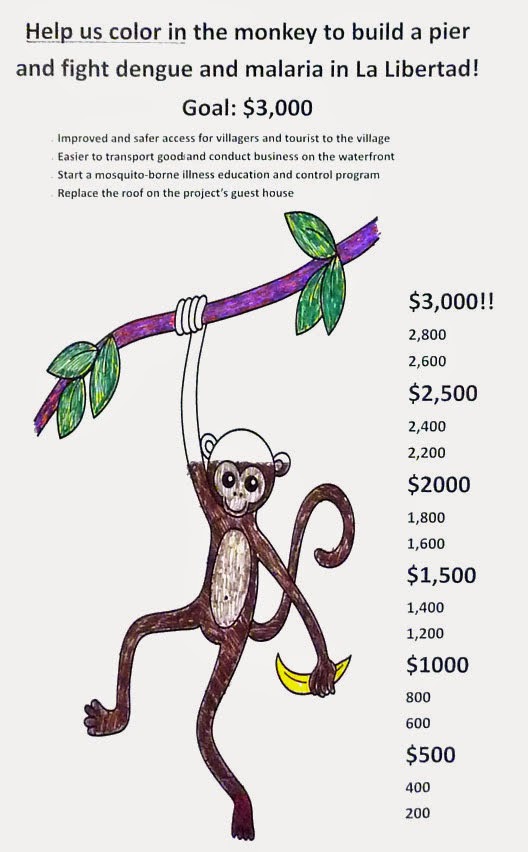
Now the monkey graph is a little bit more colored-in.  Just $600 to reach our fundraising goal for this summer.


Wednesday, July 16, 2014

Amazon Pueblo at Searsport, Maine Craft Fair

This Saturday stop by and see us at the Searsport Car Show and Craft Fair in Searsport, Maine.  We will be there on Saturday, July 19, 2014 from 9 am until 12 pm.  You will find us in back of Bangor Savings Bank, directly off of Route 1.  I hope to see everyone at the event!


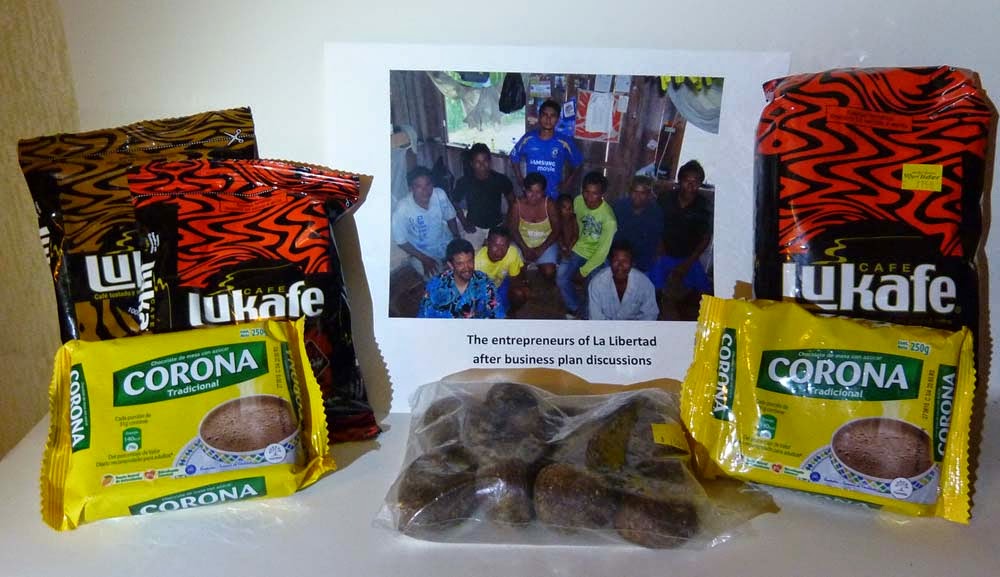
We will be selling Amazonian handcrafts,exclusive Colombian low-acid coffee, handcrafted drinking chocolate, and Colombian emeralds (both rough stones and cut gems, loose and in jewelry).


Here is our new brochure which focuses on Amazon handcrafts.


 We only need $900 more to fill up the monkey graph!

Saturday, June 28, 2014

Fun at the Fundraiser: Onward to our goal!

I picked up Sarah J (our guest performer, board member, and volunteer) in Portland at 1 pm on the event day. This time, NO SNOW! Our last fundraiser coincided with 6 inches of falling slushy mess.


We drove back to my house in Rockland and got ready for the event. My friends and project volunteers or directors Dianne, Lisa, Sarah B, Mark and Julie (and random helpful bystanders) also helped to get things organized, moved over, and maintained throughout the night. Sarah J’s family, all 8 of them, also arrived to lend a helping hand!


At a little after 5 pm we arrived at Water Dog tavern, in Thomaston, and started setting up. Everyone at the tavern was friendly and helped us get things moving.


We had a little problem with the positioning of the display tables, but between the efforts of Dianne, Lisa, and I they came out well.


Vicki, the owner of Water Dog, even found us some cachaça, an alcohol popular in the Amazon. They served the cachaça in a drink called a caipirinha. Water Dog donated $1 of each caipirinha to the project. Thanks Vicki!


People slowly started coming in. The weather was cooperating, warm but not hot. I mostly answer questions until Sarah started playing at 7:30. Sales started out slowly but then picked up.


Sarah played until about 10 pm. The tavern was filled to capacity and over the course of the evening we had well over a 100 guests. In all we raised $1,700 at the event. We had pre-event sales and donations of $400, for a combined amount of $2,100! This is short of our $3,000 goal, but we are well on the way. We hope to do at least one flea market or craft fair this summer, and maybe one last event before I leave for Colombia in September. The monkey graph is almost there.  Thank you to all who assisted with or attended the event and helped to make it a success!

Thursday, June 5, 2014

SARAH J PLAYS ROCK AND BLUES AT FUNDRAISER: Music, stories, emeralds, handcrafts, and more!

Sarah J, a singer-songwriter from New York City and Amazon Pueblo volunteer, will be performing during a fundraising event at Water Dog Tavern on Saturday night, June 14, from 7:30 until 10 pm. The event will be in support of building a pier and other goals in La Libertad. A $5 suggested donation will be accepted at the door.
Alane's event poster from Water Dog Tavern

Sarah is one of a kind in the blues and soul music world. She creates her amazing acoustic rock and blues sound by drawing on her southern background. You may find Sarah J on stage with a guitar today and a piano the next, but don't be fooled, this tattooed, whiskey and wine girl will haunt you with her polished melodies and lyrics. Currently living in New York City, Sarah J has lived and played all over the East Coast. "Happier", Sarah's solo debut album, was released in 2011.
Sarah J in concert!

“Versatile, soulful, melodic acoustic rock with lyrics that span vulnerability to empowerment, tricking the listener into thinking and feeling after being drawn in on the surface by hummable, radio-ready hooks.” - Gary Trust, Billboard Magazine


The evening will start at 6 pm with the presentation and sale of Colombian trade goods throughout the evening, such as:

• Indigenous handcrafts (jewelry, blowguns, Amazonian blood wood carvings, piranha and other river fish products);
Juan and Carlos the piranha
 
Indigenous handcrafts
Coffee and chocolate

• Exclusive low-acid Colombian coffee and forastero chocolate, and;
Emeralds and fossils


• Emerald gold and silver jewelry from the Muzo mines of the Colombian highlands, purchased directly from the emerald district of Bogotá.  Fossils from Villa de Levya, Colombia.

Ben volunteering with villagers in Leticia


During the sales, two former village volunteers and the other directors of the project will be on hand to answer question about the program, volunteer opportunities, and recount stories of adventure from the village.

Sarah J volunteering and singing in the village
At 7:30 pm Sarah J will start to perform. Sarah will be playing a wide range of music from original songs to top 40, folk, and rock. Sarah is a board member of the Amazon Pueblo project and volunteered in the village during the summer of 2013.

In addition to building the pier, which will help support the village’s sustainable business efforts, the money raised will support a number of other goals in the village, including:

• Paint the dock which was constructed from the project’s last fundraiser ;
• Replace the roof of the project’s guesthouse, and ;
• Initiate a program to reduce the village’s Dengue fever carrying mosquitoes.


Please visit Sarah J's website at http://www.thesarahjshow.com for more information and to take a listen. Be sure to learn more about the Amazon Pueblo Project by visiting their website http://www.amazonpueblo.org. And to view the full menu and discover more about The Water Dog Tavern in Thomaston, please visit their website at http://www.waterdogtavern.com.

Sunday, May 18, 2014

Dengue Fever in the Colombian Amazon

Last year, July 2013, my friend Sarah volunteered with the Amazon Pueblo project. She came down with a fever during her last two days in the village. She started her return trip for home while in the middle of her illness. Later she told me that she thought she was going to die while waiting for her plane. Sarah’s fever came and went in a two to three hour cycle over the course of a week. She also had a severe headache and many joint pains.


Upon her return to New York she went to seek treatment from her doctor. From her symptoms they believed she had Dengue fever. However, the test for Dengue was very expensive and it was not covered by her insurance. And even if she had confirmed her sickness as Dengue, there is no know medicine to treat it. Bed rest and intravenous fluids are the only treatment.

I read about the illness after speaking with Sarah.

Here is the Wikipedia entry for Dengue fever.

I also found this list of interesting Dengue facts.


In the village I spoke with a former soldier from the Colombian army. He had been stationed in the Colombian Amazon for nine months. He said that the mosquitos that cause fever are the ones with “patas blancas”. This translates as “white legs”. After looking at a picture on the Wikipedia page, I knew what he meant.


When I returned to Bogota after staying in La Libertad, I had a low fever, headache, was very weak and tired, and had many aches and pains. This lasted for two days. However, I had no rash. A rash is also a frequent symptom of Dengue. I did develop a dry cough, also a symptom. (This dry cough is still with me six weeks later.) For two nights I slept very poorly.

After two days the worst was over but I was still easily tired and a bit on the weak side. I thought, "Is it possible I have Dengue?"

I was tested 10 days later at the VA hospital. Two weeks after that I got the results, which were positive.


The information I read on the Internet said that there are five different strains of Dengue. About 80% of the people who contract Dengue have a mild, or no, reaction. After they recover they have immunity to that particular strain of Dengue. However, if they are infected with one of the other strains, then the possibility of having a more severe reaction are greatly increased. This reaction may be life-threatening.


What does this mean for the project? Should I go back to the village when I run the risk of being bitten by a mosquito carrying one of the other stains of Dengue? Will I become much sicker, possibly a life-threatening illness, the next time I return?

This illness is faced every day by the people of La Libertad. I believe that my intimate awareness of the disease will help me to better educate the villagers of what Dengue is and how to reduce its impact on the people. This is one more area in which the project may make a real difference.


I plan to do the following things differently when I return:
  1. Use a deet-based repellant on my clothing only
  2. Use combinations of natural repellants on my skin
  3. Use a permethrin -based repellant on bedding and netting
  4. Aggressively check for open water containers and mosquito breeding areas in and around the village. Start an education and action program to eliminate these problem areas
  5. Change the roof of the guest house from palm thatching to metal laminate (also to eliminate our new cockroach/rat infestation problem)
  6. Seal the cracks in the walls, door, and floor of the guest house
  7. Start an education and action program to reduce the spread of mosquitos in the village and how to recognize the disease.

If any of our readers have experiences with Dengue and/or suggestion of other things we can do, please ADD A COMMENT!


Saturday, May 10, 2014

Last Week in the Amazon: It all comes together!

One month after returning from the Amazon I am finally posting for my third week in the Amazon!  I was slowed down significantly by, it is official now, Dengue Fever.  (Last week I received the Dengue test results back from the lab.  My next post will discuss "Dengue in the Colombian Amazon".)
The Mosquito Aedes aegypti

But for now, week three:

The first half of week 3 was spent working on the dock. A dock is called a balsa in Spanish.
The balsa:
• Will be used for people to more easily get off of their boats and to make their way to shore.
• Is used to secure and chain boats to help avoid theft
• Is used to store the boat motors
• Gives children a shelter from rain and sun when waiting for the school boat
• Gives a place for merchants to sell gasoline, food, water, and other items to passing boats.

During the second part of the week, I returned to Leticia to finalize the process of incorporating the Asociación de Agricultores, Pescadores, y Artesanos de la Comunidad de La Libertad, a non-profit cooperative which the Amazon Pueblo project helped the village to form. A future blog post will help to explain “How to Form a Business in the Colombian Amazon” and provide suggestions for more business opportunities for the village!


Morning Coffee and Arepas

The work we are doing for the dock is done by volunteers from the village. We supply the materials for volunteers. The volunteers come from the village and are willing to help lend a hand. Not all people are motivated to help. The majority of the helpers range in age from 30 to 60.

On Tuesday, March 4 at 6:30 am we started the day with a simple breakfast of coffee and arepas (corn-based fried bread). The villagers talk while having breakfast, corral children, and joke with each other. They have the feeling of being an extended family who knows each other well. After about 45 minutes of eating, talking, and waiting for late arrivals, we set out to do our work.

Our Volunteer Simona and the Kids

Simona, a volunteer from Slovakia, was helping in the village for the last week of my stay. She continued working for two weeks after I left. She taught English, helped paint the kitchen, and assisting with the business side of the project.

Simona contacted me about six months before her volunteer time. She speaks Slovak, Spanish, and English. Simona has spent time volunteering at a coffee plantation in another region of Colombia. She has education and experience working with tourism and handcrafts. Simona got along very well with the village children, helped with the operations of the project, and gave many ideas for the development of village handcraft production.
We hope to have her visit the village again soon.

Mil gracias Simona!

Here is a link to Simona’s blog entry from her time in La Libertad:
http://pimentona.wordpress.com/2014/04/05/amazon-adventure-volunteering-in-the-lungs-of-the-world/


Loading the Boats

Energized from breakfast and the cooler morning air, we head off for the worksite. That particular day, we had 10 volunteers. The two youngest, Orley and Hector, are ages 8 and 9. Manuel, the oldest, and also our chainsaw operator, is 65.


The River Trip to Cut the Trees

The trees we needed were not found around the village of La Libertad.

La Libertad was helped by a village about 45 minutes upriver. They gave us three trees and sold us two. The largest part of the trunks will be used as the floats on the bottom of the dock. These five trees are a specific rot-resistant species with excellent flotation properties. The price for these trees is $10 dollars US each. Gustavo explained to me how the village selling these trees is another indigenous village, friendly with La Libertad. The people of La Libertad also help this village with communal projects when possible.


The First Trunk

After arriving in the tree area, we slowly motored parallel to the shore for about 10 minutes. We eventually found a suitable tree. One of the requirements was that it be close enough to the water to be easily moved and floated.

All wood used in the indigenous villages is cut and milled using a chainsaw. It is cut while still green and usually used to build within a day of being cut. Many different types of trees are used, depending on what is being made. Wood used for posts that are being set into the ground is strong, heavy, and rot resistant. They have special types of wood for the framing of structures. They also have special wood that is best used for floors, walls, doors, and ceilings. Other specialty woods are used for handcrafts. These are particularly beautiful.

 Manuel's First Cut

The tree that we are using for the dock also has the special property of toxic sap. It is very irritating to the skin when touched. I believe this is one of the reasons for its great rot-resistance.


Waiting for the Trunk

Simona, Annie, and Orley are waiting patiently on the boat for the trunk to be cut. By 10 am the temperature was already in the 90s, but luckily we had an occasional cloud to block the sun. Unfortunately we had no drinking water, as we expected the work to go much more quickly.


Monkey in a Tree

Orley and his cousin spent some time chasing monkeys and playing in the jungle. At times it seems the kids have more patience with waiting than I do!


A Video of the Tree Falling

At last the tree fell. I questioned Manuel’s ability to drop the tree where he wanted and not on any of us! However, before it fell, we went into the boats and moved a safe distance away. The video does no justice to the sound of the tree echoing in the forest as it fell. The video does no justice to the shockwave we felt when it hit the ground.


Raising the Trunk

After the trunk had fallen, it had to be trimmed to size. The total length needed to be about 25 feet. After being trimmed to size, the log needed to be raised out of the ground and mud into which it had fallen. This was done by placing many small logs, used as levers, to slowly raise the trunk above the forest floor. When the trunk was at the proper height, it could be rolled onto other trunks that led to the river.


Rolling the Trunk

At last the trunk is at the proper height. Now the fun part –rolling to the water!


Manuel Cutting in the Water

Our second trunk was found already floating in the water. The only difficulty that this presented was that it needed to be trimmed to the proper size. Manuel needed to take off the base of the trunk and the top part that we were not using. All of this had to be accomplished while the trunk was floating in the river. If you imagine this part to be unsafe, I have to agree. The only thing worse than standing on the floating trunk is what he did next: he stood upon the bow of a boat to cut into the trunk!

Cutting from the Bow

In this picture, Manuel is balancing on the bow of a boat, tippy even when sitting, and finishing the cut on the tree’s base. He only came close to falling once and almost dropped the chainsaw in the water. His chainsaw seemed to take quite a soaking and a beating! I have a new respect for the orange Husqvarna machine. I believe it has a 42 inch blade.

Taking the Trunk to La Libertad

After we had cut the trunk to size, it had to be secured to the boat. We did this with a 1 inch thick poly rope, the same rope which will later be used to secure the dock to the shore. The first half of the trip was difficult boating, as our boat’s motor was underpowered given the size of the trunk and current of the river. The second boat, which had been unsuccessfully scouting for another trunk, joined us and helped to propel our first trunk down and across the river to the village. The going was much easier with the trunk between the two boats. The trip back took about 1 ½ hours as opposed to the 1 hour we spent in the morning to arrive at the harvesting site. The trunk made a nice bed for Hector, but I was surprised that he did not fall asleep and roll into the water!

The Base of the Dock

In this picture, the base of the dock is almost complete. One more trunk is needed to ensure adequate buoyancy for the finished dock. The finished dock should include a floor, four walls for about half of the structure and a metal laminate roof. When funds are available, we hope to give it a good coat of paint as well!


Late Lunch for the Workers

After the work day we give a lunch/early dinner to the volunteers. The women start cooking around noon and have everything ready for 4 pm. Everyone that pitched in for the effort is invited. For this meal we had fish stew, rice, plantain, arepa corn cakes, Kool Aid and coffee. As typical of a dinner in the jungle, we ate for over an hour. After eating, the village women cleaned-up until the sun went down. At 5 degrees south of the equator where we are located, the sun always rises at 6 am in the morning and sets at 6 pm in the evening.

I have never been to a barn-raising common to parts of the U.S.A, but I feel that our efforts to build the dock were equivalent to this.


Sunset over the Trunks

At last the day’s work is coming to an end.

The last trunk needed for the dock has arrived at the village shore.


Night Hunter

That night I noticed a visitor to our kitchen. Gustavo said that this was a good snake that was hunting for insects. It was not poisonous. I found it very beautiful.

Thank you to Simona and Stefan, who helped me during this time and also contributed some of the pictures used for this post.