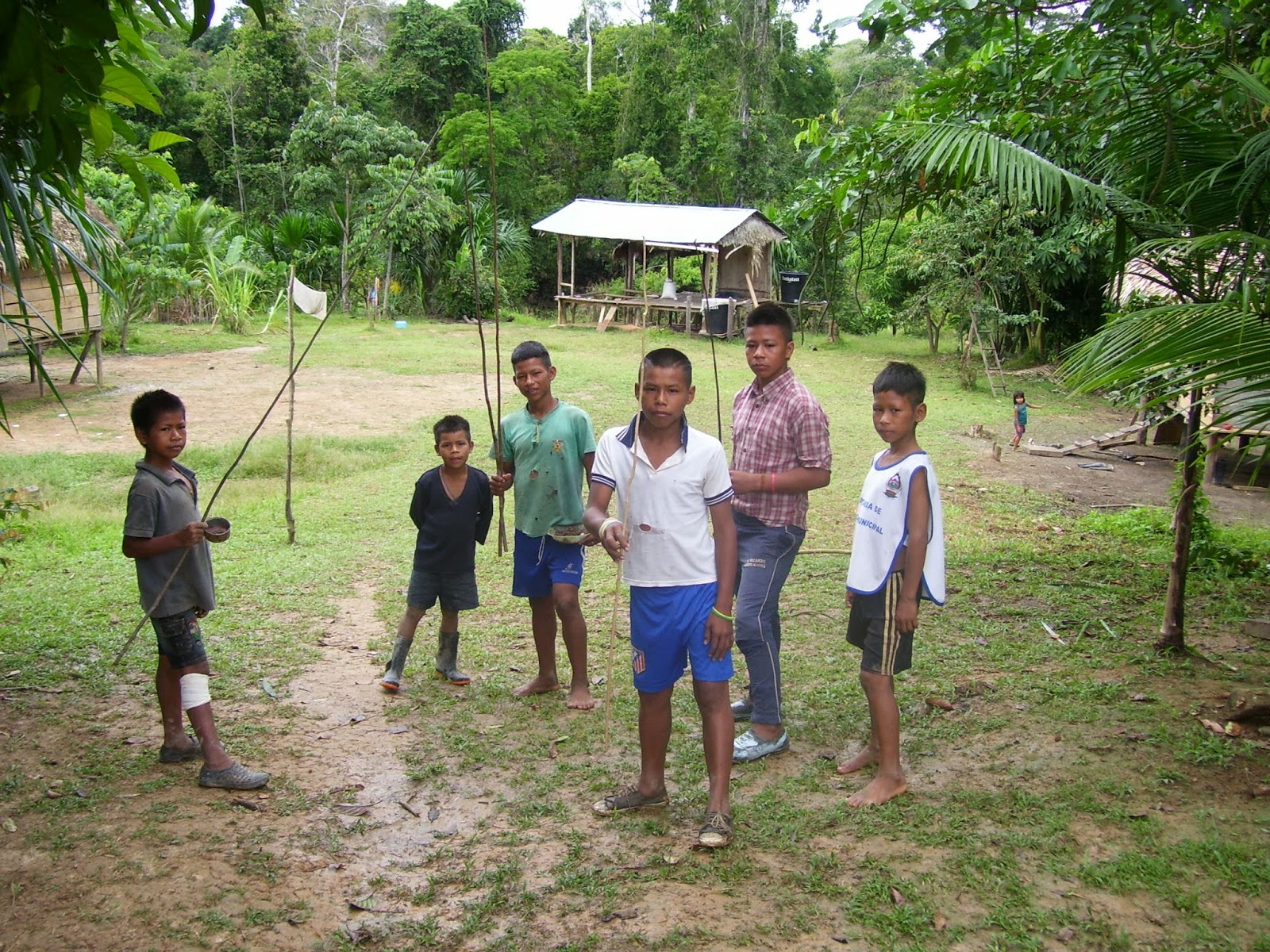
Ben Angulo presented the Amazon Pueblo project at two location during the months of October and November. The first was at the Rockland Public Library. While this was a small crowd (only 9 people) it did generate leads for the selling of handcrafts for the project and cash donations (thanks!).
The next presentation was for the Historical Society, located in Searsmont. Ben was joined by another of the project's directors (Julie Russo) without whose help the presentation would not have been possible. This was the best-attended of our non-school presentation, with over 30 people participating. Many great questions were asked. After the presentation we met for delicious baked-goods and apple cider. Thanks!
Sunday, November 17, 2013
Tuesday, October 1, 2013
Amazon Pueblo featured in Billboard Magazine!
Upon my return to the States in July I was invited to write a guest post for Billboard Magazine's ChartBeat column about my experience teaching and performing in La Libertad. I finally managed to condense my experiences into a 1000 word article, and here it is! Thank you Gary Trust at Billboard for helping to bring awareness to our organization and the people of La Libertad!!
Sunday, September 29, 2013
Amazon Pueblo joins the Maine International Trade Center!
Amazon Pueblo is proud to announce our membership in the Maine International Trade Center. This should help us to work through the difficulties of starting trade between Colombia and Maine.
On October 30, 2013, the Trade Center is leading a trade mission to Mexico and Bogota, Colombia. With luck a representative from Amazon Pueblo will go with the mission to Colombia. This would give us the opportunity to make valuable business contacts and learn more "of the ropes" of international trade! A link to the mission is here, http://www.mitc.com/trade/Mexico-ColombiaTradeMission2013.asp.
From the MITC's Mission Information Sheet:
Opportunities for Maine
Mexico and Colombia rank among the top emerging markets for Maine exports, with Mexico positioned as one of the top 15 markets worldwide for the state and Colombia showing signs of solid growth following the advent of a new free trade agreement with the U.S. Opportunities exist for a number of Maine industries in both markets, including: precision manufacturing to support the automotive industry; secondary and post-secondary education; medical devices and equipment; and food and beverage.
Mission Benefits
• customized one-on-one appointments: Individual appointments in both markets based on your business goals.
• in-country research: Research will be conducted by industry specialists in each market, and you’ll have the opportunity to meet via video-conference to discuss your company’s objectives before leaving Maine.
• Market briefings: Learn more about current economic and political conditions in Mexico and Colombia.
• State of Maine reception & networking events: These events provide an excellent forum to strengthen existing relationships, as well as establish new connections.
• Group tours and events: Visit private companies and research institutions and meet with Mexican and Colombian leaders to gain first-hand knowledge of the market environment.
On October 30, 2013, the Trade Center is leading a trade mission to Mexico and Bogota, Colombia. With luck a representative from Amazon Pueblo will go with the mission to Colombia. This would give us the opportunity to make valuable business contacts and learn more "of the ropes" of international trade! A link to the mission is here, http://www.mitc.com/trade/Mexico-ColombiaTradeMission2013.asp.
From the MITC's Mission Information Sheet:
Opportunities for Maine
Mexico and Colombia rank among the top emerging markets for Maine exports, with Mexico positioned as one of the top 15 markets worldwide for the state and Colombia showing signs of solid growth following the advent of a new free trade agreement with the U.S. Opportunities exist for a number of Maine industries in both markets, including: precision manufacturing to support the automotive industry; secondary and post-secondary education; medical devices and equipment; and food and beverage.
Mission Benefits
• customized one-on-one appointments: Individual appointments in both markets based on your business goals.
• in-country research: Research will be conducted by industry specialists in each market, and you’ll have the opportunity to meet via video-conference to discuss your company’s objectives before leaving Maine.
• Market briefings: Learn more about current economic and political conditions in Mexico and Colombia.
• State of Maine reception & networking events: These events provide an excellent forum to strengthen existing relationships, as well as establish new connections.
• Group tours and events: Visit private companies and research institutions and meet with Mexican and Colombian leaders to gain first-hand knowledge of the market environment.
Saturday, September 21, 2013
Farewell to La Libertad (and epilogue)
Here
are the notes from my final morning in La Libertad, my 24hrs of
travel from the village to my apartment back in New York, and
everything in between. This won't be my final entry in our blog, but
my final one initially composed while actually in Colombia.
**
3 July
2013 620am
It is
620am and I am on a boat leaving the village I called home for the
past 8 days. There are 10 of us: a mother with a sick baby, Ben,
three sons/workers to help with supplies, Gustavo, his daughter, and
David. The boat is low in the water like the fog is low in the
forest. The breeze blows through my dirty hair and sticky clothes and
I feel refreshed though I am not at 100%. Yesterday I got some form
of heatstroke and had to sleep most of the afternoon. I still feel
like someone or something is squeezing my ribs tightly so I can't
breathe deeply but I'm a little better. No stars in my head right
now. Last night we had a small dinner and I sang a few songs. I cried
too. The hospitality I've been shown, help I've been given, humility
I've learned. The love I saw and felt, from parents to children,
siblings, cousins, and everyone to me. There is a part of me that
wonders if the feeling of not being able to breathe is my heart
breaking after all I saw and learned this week. I'm never good at
leaving – whether I'm the one going or being left behind. I've done
it plenty but it never gets easier. I'm hoping I won't have to check
my backpack from Leticia to Botoga because I won't make my flight.
24hrs
from now I will be on a train from JFK to my apartment – if I make
my flight – and there I will shower and sleep and wash clothes in a
washing machine and snuggle with my cat. I will rest for two days
before going back to work where I will speak English and work with
the general public.
But...
I will
not be woken early by obnoxious roosters. I won't hear the peal of
children's laughter at 6am and, surprisingly, not be the least bit
annoyed. I won't play duck duck goose with eager village children. I
won't be cooking on an open fire and failing miserably nor washing
clothes in water from the Amazon river. I will be eating fresh
vegetables for the first time in a week, but I will not be eating
them in a group. I will sleep in a real bed with a fan to cool me and
unlimited clean drinking water but I will be sleeping alone in my
apartment. I will have a shower and clean hair but no wild baby
monkey to sing along with me.
I won't
see millions of stars every night or the mist rise over the jungle in
the morning nor will I sing to the children in the afternoon. No
cuddling my baby dog Cani, swinging lazily in a hammock, or buying
beautiful handcrafts from the women.
It is
time to go home to what Ben calls our “vida aburrida” - our
boring life, where I do such “important” things all day to make
enough money just to get by. I really, really hope I pass my diplomat
exam and can begin my “vida de aventuras” soon.
I also
want to save money for visits. I did realize just how many things I
don't need while I was here. Who is luckier? Me to live in the
biggest city or the villagers to live in Paradise? We both struggle
with money, food, and what others need or want from us. We are not so
different after all...despite how here they live alongside the
animals, we are all still human.
David
is going to stay the day with me in Leticia because the men need to
return at 11 and my plane is not til 630 so I don't want to be alone
and sick with all of my things for that long. I am grateful he can
stay with me, but sad I will eventually have to say goodbye to him
too. I'm grateful to Ben for starting this project and being so
knowledgeable, understanding, fun, and kind. He has lived a life of
adventure – and continues to do so – and I wish for the same for
myself.
For
now...it is time to get ready to go home.
1145am
I am
alone in a hotel in Leticia with soaking wet hair, 3 backpacks, and a
stomach illness. We're fairly certain it's heatstroke again so we
decided to put me in a hotel to shower, drink, and rest while the men
find the supplies they need to take back to the village. I already
had to switch rooms because the first toilet wouldn't flush but I'm
proud of myself I was able to handle the issue alone. I'm not
thrilled with myself being sick. Rapid heartbeat, nausea, etc. :(
Also on
the trip over our motor stopped so we had to wait for another boat to
come get us and pull us to Leticia because we had no oars. What an
adventure! It was curious – we had no oars, no radio, no way to
call for help. Another family in a motorized canoe was driving by and
Gustavo flagged them down. They tied our chain to their boat and
hauled us all the way to the mechanic in Leticia, no questions asked,
no payment expected. Once again, that sense of community that I find
so lacking in the States was extended to us and got us to our
destination safely.
But,
I'm here, I'm safe, I'm resting, and I think I'll be able to leave
and get home safe. By this time tomorrow I should be in my own house
showered and resting. Happy for that but very sad this adventure is
behind me already. Seriously, how on earth can I go back to daily
life now? And how can I try not to forget what I saw, what I felt,
what I learned, while I'm stuck in the rat race?
1004pm
It is
10pm and I am alone in the airport in Bogota, soaked in sweat from a
fever that broke once I boarded my first flight, where I left
everything and everyone behind in Leticia. We went to a drogueria
(Colombian pharmacy) and I got some random Colombian drug to stop my
stomach issues before the flight but I'm not sure how much they're
helping. Strange, I now feel like I have a real reason to save more
money – so I can move to Colombia. Honestly, this too would bring
me a life of adventure, whether or not I'm able to become a diplomat.
The challenge for me will be finding a job with the language barrier
but I'm getting better and better each day. In fact I'm thinking more
in Spanish when I have to speak or read and I'm remembering more
words.
The
flight out of Leticia was long delayed and I felt incredibly sick. A
fever held me in its grasp and I couldn't do anything but wait. David
was already gone back to the hotel. No internet service and no phone
service, and no way to get water in the waiting area. So I waited in
pain and discomfort, but once aboard I was okay.
Once we
landed – on time, thankfully – I left the plane, exited the
airport, and found the international terminal. It was much closer
than I expected and though it wasn't as empty as Ben predicted, it
didn't take long to get through immigration and security. Since I had
been able to carry my maleta on from Leticia I figure I'll do the
same now. I'm fine with gate checking – I just want to make it
through.
My
plane is delayed and I'm exhausted as this is by far the latest I've
been awake since I arrived in Bogota for the first time ten days ago.
For
now, it is nearly time to put my tired, sad, dirty, sweaty, unshaven,
achy body on a plane and take a nice long nap until I wake up in my
city.
My life
is full of adventure.
One
final memory from the village I haven't written about yet, last night
we piled into a house porch and watched a poorly dubbed movie with a
host of other families. The TV is small and runs on a generator and I
don't think they have many movies to choose from. Children ranging
from breastfeeding infants to grandparents were all there, the kids
laying on the floor with limbs all over, dirty feet in each others'
hair. Couples lounged lazily touching in the heat and the teens
watched from a platform behind. I was able to understand most of the
movie and the main character's name is Sarah so the kids had a field
day with that. Again, the mix of ancient humanity and today's
technology was so strange.
**
After
that entry my final flight began boarding and I left Colombia to
return to New York. I ended up going to the doctor the next morning
(after sleeping 28 hours straight) and not being allowed to go back
to work for another few days. They're still not entirely sure what I
had, but it was some type of cyclical fever, coming and going, and I
still occasionally have woozy spells now when I overdo it. So, it
wasn't heatstroke, but for anyone considering a trip to the village,
make sure you drink your water anyway! I can't imagine dehydration
compounding whatever it was I was fighting that week – but I'm
certainly glad it waited to hit me until I was already leaving the
village, so I got to enjoy my entire stay.
Since
I've been home my priorities have shifted some, and I've started
putting plans in place to change my life. I'm taking my diplomat exam
in 3 weeks, though the odds are stacked against me, and trying to
plan one day at a time since I don't know what life will bring to me.
Amazon
Pueblo will be having another fundraising event this winter and I'm
hoping to arrange to be able to attend. I've been able to give out
most of the village-made jewelry gifts to those who donated toward my
trip. My photo album (of over 500 photos) has traveled to friends and
family with me, to tell stories and share images of what they helped
me experience. The photo album will be going to Ben to bring to La
Libertad since he will be returning before I do, and it will stay
there.
Ben
remained in La Libertad for about another month after I had to return
and he's got stories of how much things progressed once they had the
right materials. He'll write about the development of the project and
how our goals have evolved. I'm looking forward to continued
involvement in this nascent organization and helping to bring this
wonderful community to a place of sustainability and dignity.
¡VIVA
COLOMBIA!
My final days and a Packing Guide
Today's
entry comes to you after a whirlwind week of visiting family,
visiting friends, and reliving some favorite childhood experiences
while I'm still in the States. This was the first time I'd seen these
friends and this side of my family since my return so there was a LOT
of talking about my trip! I think I may have convinced one or two
friends to come visit La Libertad with me, but my family still seems
slightly unsure of my sanity. ;)
The
morning of the below entry was the morning of my last full day in the
village. It's a jumble of a suggested packing list, small moments I
want to remember, and a general feeling of being out of sorts and
annoyed. As it turned out, I was in the early stages of a feverish
illness, but I didn't realize it until that afternoon:
**
I'm
thankful so many of the villagers are coming together to help build
the water filter and rain-catching systems. Also to build the solar
panels/add them on afterward. It's really inspiring to see to many
people coming together on a project they believe in and also
understand will help their village. I'm really glad Ben started this
project and that I've been able to be a part of it. What a crazy cool
adventure it's been.
Things
I think people might want to bring when visiting here:
3 pair
of quick dry SPF antimicrobial convertible pants
3 long
sleeve SPF lightweight quick dry tops (if you are pale and prone to
burning like I am, or trying to avoid mosquito bites. Otherwise short
sleeves are fine)
1
swimsuit to shower in
3 sets
of quick dry antimicrobial underwear
natural
febreeze
baby
powder
deodorant
dry
shampoo
fan
(when the solar panel is better)
lots of
hand sanitizer
baby
wipes
shower
sandals/sandals you can wear socks with
3 wool
sock pairs – most likely merino to combat wetness and odor
sleeping
bag liner (big fan of the Sea to Summit CoolMax liner I got)
quick
dry full size towel
markers
tape
pens
photocopies
of basic lesson activities to hand out for children
headlamp
knife/tools
batteries
memory
card/camera
money
(small bills)
various
meds – especially malaria pills. Our first night we found a
mosquito with malaria and have seen more since. Also Gustavo became
sick with malaria over the summer.
Sun hat
Big fan
of the REI sahara shirt. The chest pocket is perfect for my passport.
Tons of
SPF and insect repellant
anti
itch lotion
notebook/pen
Tuesday, September 17, 2013
The Amazon Returns to the Rockland Public Library!
Interactive slide-talk at the Rockland Public Library
(Rockland, Maine, USA) on October 10, 2013 at 6:30 PM!
![]() |
| Main display case at the library |
One year after being founded as a non-profit business in
Maine the project is at a crossroads. We
have improved the infrastructure of the village which will allow visitors to live
healthily. The villagers understand and
want to go forward with the project. We
have made positive contacts with the local government. Where do we go from here to achieve our
mission? Business!
![]() |
| Just some of the products which we hope to import |
![]() |
| Handcrafts |
Learn about the adventures, challenges, dangers, and
opportunities for profits for the people of the Amazon!
![]() |
| Necklaces |
Join us to
experience the latest developments in this exciting project. Would you like to become involved or even visit
the Amazon? Come to the presentation and
find out how!
![]() |
| Purses |
Friday, September 13, 2013
Peru, animals, and kids singing my songs
Today I
write to you with a belly full of arepas, eggs, and chocolate, just
like in Colombia. Today I also write with much on my mind, not all of
which may make it into this one entry – I will likely need an
entirely separate entry to describe some events that have transpired
over the last month or so since my previous missive, but we'll see
what happens.
On one
of my days off each week I usually spend an hour or so in the morning
cooking a breakfast pretty typical of what we ate each day no matter
where we were in the country. I found a Spanish grocery store near my
house here where I can get arepa flour (though I cried a little when
it said “made in the States;” I had been hoping for “made in
Colombia” like the herbal tea I drink every day) and the same hot
chocolate we had in the village. I listen to Spanish rock and
alternative music and enjoy that little bit of vacation back to this
wonderful country, and it's a fun reminder to me that yes, I did live
that, and it isn't just something I thought about doing.
This
week, if anyone's been watching the news, you know things in Colombia
have been a bit dicey with protests against free trade agreements
that began with farmers and have now spread to students and various
labor groups. I have been in touch with David and he's fine, though
he said a cousin was injured in a protest. Trade is absolutely
important (more in a later entry, I'm sure) for economic growth in
Colombia, but of course, providers need to be properly compensated
for whatever they're trading.
Anyway...today's
entry is from 1 July (I missed a morning, but for good reason – the
morning in between I went to Peru!), which, sadly, feels so long ago
already. It's only been a bit over two months but it feels much
longer. Luckily, each time I review and edit my notes, it puts me
right back into our little cabin on the side of the hill in the
village, so here goes! This one's pretty long, but it was a very exciting time!
**
I made
it to yet another country! Yesterday we went to Peru so I could see
the animals at the nature preserve. We woke up very early and cooked
a quick breakfast of arepas, and then Gustavo took his wife, baby,
Estefani (the 7 year old who helped me clean up the school building),
David, and me out to his canoe – the very same one Ben was stuck in
during the storm. Now having seen it, I'm even more impressed neither
he nor anyone else nor any gear was lost during that great adventure!
Exactly one week ago today I boarded a plane for my first
international trip ever, and now I've been to three countries.
Ben had
told me there would be a baby jaguar but I wasn't sure what else we'd
find. I need to take a moment here and say how amazing it is that
Gustavo knows where everything is, and where he is, and how to get
everywhere. There aren't roads, very few signs, no GPS, no maps, and
yet those who have grown up here in the jungle have an innate sense
of where everything is located. In my vida aburrida I balked at using
a GPS for years, until my band was touring to unfamiliar areas too
often and it became much easier to rely on the GPS than read a map.
Four years later, I GPS myself just about everywhere and have a
fairly poor sense of direction a vehicle (though I am okay on foot).
But here in the jungle, Gustavo can just walk or get in his boat and
know exactly where he's going and how he's going to get there. Once
again, my modern life is thrown into perspective, thanks to the
deceptive complex simplicity of jungle life.
In Peru
we pulled the boat up and a lady holding a sloth met us first. I got
to hold the sloth while Gustavo asked her about other animals. In
Peru animals don't have the same rights they do in the US, so places
like “nature preserves” are very different as well. In the US,
nature preserves are often natural habitats protected by fences or
borders with little to no human development or impact, save for a few
trails or the like. In Peru, this nature preserve had private homes,
a school, a large kitchen/sleeping area for group tours, a gift shop,
and more – but of course, jungle-style. The school was one long
building with one classroom per grade and the children wore uniforms.
The homes were the stilted buildings with ladders like we had in La
Libertad. The most developed section was the kitchen and sleeping
building for group tours.
The
most surprising aspect of this preserve for me was that the animals
weren't hanging out in enclosed natural environments...they were
living in the private homes and to see them, we went into these
families' homes and they'd show us the enclosures they'd built to
house the animals. In one home I met a macaw, baby sloth, huge
anaconda, caiman, land tortoise babies, and water turtle babies. And
a baby puppy, of course. One home!! I love animals, but this house
was about the size of my apartment back in New York, there were at
least three humans living there (that we met), plus all these
animals. Such a reality check. We took many photos with the animals
and paid the family for letting us come in. In some homes, the fees
are by the animal, some are one fee for the entire home. I was glad
to have David and Gustavo with me so they were able to negotiate. My
Spanish is decent but my accent is decidedly foreign – not
necessarily from the States, but Colombians have a distinct manner of
speaking I absolutely haven't mastered, so it's clear I'm not from
there.
We also
met an 8-month-old manatee being housed in a kiddie pool under a
wall-less roofed building, an 8-year-old water turtle (the mata-mata)
also kept in another small pool, and finally the baby jaguar, which
they referred to as the tiger. We were warned prior to seeing her
that she was in heat and was tied up because she was very angry about
it. She too was kept in a private house. Just an aside here, but how
cool would it be to have a baby jaguar live in your house? But as we
entered and waited for our guide to unlock the door to her room and I
could hear her first, my though process changed from how cool to how
sad. She lived in a wooden room in a wooden house – the room about
10x10 feet – and had a makeshift halter tied around her forelegs
connected to the wall to keep her from getting out and hurting
someone. She wasn't happy at all to see us, and I wouldn't have been,
had I been in her situation. We took photos of her beautiful coat
while she kept her low growl steady and I felt sad about her living
situation. Jaguars should be outside running, not kept in windowless
rooms with wooden floors...(Note added after I got home, I now
believe the cat to be an ocelot, not a jaguar, based on her size and
coat pattern, but still, it was sad to see her locked up just the
same).
I asked
David at one point how these families got all these animals and were
able to keep them and he responded simply “Porque es la selva”
(Because it's the jungle). Out here, it was basically
finders-keepers. If you found an animal and you could take it home,
it was yours, whether a sloth, a caiman, whatever. On one hand,
that's kind of exciting, but on the other hand, it doesn't bode well
for the animals. They can be kept in conditions that can't possibly
be happy for many of them, eating food that's very different from
their natural diets. These families don't have a lot of money to
build special enclosures for the animals or buy specific food, and
there's not a lot of work to go around in the jungle, so keeping the
animals provides a source of income. It seemed somewhat of a vicious
cycle to me, as an animal lover with a completely different set of
cultural norms.
We
stopped for some sodas at the kitchen building and talked to our
guide a little bit about the different adventures they offer there,
so Gustavo could network and can bring future tours here. We took a
lot of photos so Gustavo can have them to show tour groups as well,
so the trip not only was fun for me, but helpful for Gustavo's
financial future, since he makes most of his money by guiding tour
groups from Leticia.
On the
boat ride back to La Libertad, in the little canoe on the Amazon
river, I kept thinking, “This is my real life. I am really in a
canoe on the Amazon and I really just held a baby sloth and shook
hands with a manatee. Look what happens when you can change your
mind and get focused. I went from growing up poor (relative to the
States) to teaching English and holding a sloth in the Amazon,
walking through Peru, and drinking a $1 bottle of Brasilian cachasa
in good company last night. Who gets to do this if they don't have a
travel show on TV?”
In the
afternoon I taught one class since we skipped the morning class while
I was in Peru. The markers Ben got helped SO much as I was able to
write out specific words the kids wanted, and they were able to write
both the words and translations. They were also doing really well
remembering words from previous lessons.
After
class but before dinner I played catch with some of my children –
ages probably from about 5-8. The older kids played soccer with David
at the base of the hill and the little ones and I tossed the ball
around at the top of the hill. After basic catch got boring I
introduced them to the brilliance that is “monkey in the middle”
and they got a kick out of that. We ended up playing for hours. Then
the really little girls – about 4 years old – came to sit with me
and slowly started gathering flowers and leaves from nearby plants. I
don't remember who started it but one of them tied a leaf around my
head and they all began sticking flowers and grasses into the
“crown.” One put tiny flowers in my empty earring holes and
another put a tiny flower on the bridge of my sunglasses. When they
decided I was finally done, one announced, “You're the queen now.
The Queen of the Amazon!” I was blown away by the love and kindness
shown to me by these tiny humans. Queen of the Amazon is quite a
title and I was honored to have it bestowed upon me, so we made sure
to get photos of me with my “subjects.”
While
playing, kids would occasionally step out of the circle and climb to
the top of a tree to pick some fruit. I was the only crazy person
cautioning them to “be careful, be careful!” and everyone looked
at me like something was inherently wrong with my way of thinking. I
realized these kids are far more self-sufficient and strong than I
imagined. They're adept at climbing and will often climb up a tree,
get the fruit, and jump down from the top of the tree, no harm done.
They're very athletic and they know what they're capable of. The kids
shared the fruit with me and once again I was struck by their
kindness. They have so little – they pick the fruit because they
are hungry – and yet they wanted me to have some of everything they
had. I would generally take a bite or two and pass it along to a
smaller child because I didn't want to eat all of their food. I did
get to try some really crazy fruits unlike anything we have here
though.
After
playing it was time to cook dinner. Ben and David handled the cooking
and I sang while they cooked. I actually had children request a song
I'd written myself and played a couple of days before. The chorus has
the words “baby, baby please don't, baby don't bring me down” in
it, and two children said to me in Spanish, “Sarah, sing the baby
song.” I was utterly confused and asked them what baby song a few
times before one started singing and it hit me that it was my song –
MY song, a song in English that I had written – that had made such
an impact on them that they remembered it and wanted to hear it. That
one word stuck out to them because it's repeated over and over and
they latched on to it. Amazed and humbled once again, I obliged them,
feeling more appreciation for my craft than I'd felt in a long time, and they sang along with me, making up words to the English ones they didn't understand.
Not
only did I have children singing along with me, but at one point,
Yuki, the motherless baby monkey, climbed into my lap, and actually
started howling along with me. I was shocked. It had taken him a
little time to warm up to the three of us “outsiders” and now
here he was, sitting in my lap, singing along with me. A wild animal
of a different species who doesn't speak English and isn't a pet had
willingly and of his own accord climbed into my lap to sing with me.
Even now, writing this entry in my apartment months later, I feel the
same sense of surprise and unity I felt then with him in my lap.
I want
my life to be full of such adventure always. I realize how much I
missed out on because of my mindset. And it's not just about music
and my tunnel-vision way of life for the past ten years. I will
always be a musician. Now it is time to be a human too. To
experience, to love, try, take risks, explore, throw caution to the
wind (within reason – I still take my malaria pills and wear bug
spray, but if the kids hand me food, I eat it. They don't have much
so it's a big deal).
It is
time for me to keep living and enjoy and embrace life.
Tuesday, September 10, 2013
Thank you Room 332!
A big THANK YOU to Room 332 (Camden Hills Regional High School), Ms. Alley and all the other teachers and students for their generous contribution to the project!
The donation was made last June (2013) before I left for the village. This donation allowed us to build a rainwater collection system, for over 20 villagers and volunteers, to be used during dry periods and to better purify water.
During the project work of this summer we also finished (among other things) installing a bathroom, kitchen, and repaired the guest house roof (yes, it leaked -but now no more!).
The donation was made last June (2013) before I left for the village. This donation allowed us to build a rainwater collection system, for over 20 villagers and volunteers, to be used during dry periods and to better purify water.
During the project work of this summer we also finished (among other things) installing a bathroom, kitchen, and repaired the guest house roof (yes, it leaked -but now no more!).
More project updates coming soon!
Sunday, August 11, 2013
Morning Four - The Other Side of Ben's Near-Death Experience
I apologize for the lack of posts! My laptop trackpad has been acting up, selecting and deleting sections of my writing to the point of it being impossible to type anything longer than a Twitter status, but I got a new mouse so I could disable the trackpad and finally begin writing again! So, here I am!
30th
June 2013
This
was the morning after Ben's “Near-Death on the Amazon” adventure,
so at this point, I was truly grateful my friend had survived his
ordeal. Being woken up in the middle of the night – I believe
around 1130pm – to loud knocking on the cabin door amid the
thunder, barking dogs, and rain was a little scary, but not as scary
as losing Ben forever would have been!! Anyway, my daily writings
were always a recap of the day before, so without further ado, here's
an overview of the day before that happened!
**
This
morning when I walked in the door of my “school,” children
trailing behind me, I saw that someone or some thing had used the
center of the floor as a toilet. While I brought my bag of materials
to the front of the class, one of Gustavo's young daughters,
Estefani, put her notebook down and ran to the back of the building
where she knew there was a broom. Without me saying a word to her or
asking for her help, she came running back with the broom, and in her
little bare feet, swept the pile off the floor and out of the
building. I thanked her profusely and she just skipped back to the
corner to put away the broom like it was no big deal. I was simply
shocked. I very rarely see that level of helpfulness and
responsibility in my daily life – especially from seven-year-olds.
For her to just see something that needed to be done, and do it
without prompting, complaining, or demanding a reward was incredibly
heartwarming.
The
kids seem to be remembering words today so I feel like I'm making
progress!! They're shy about speaking but at least they can tell me
how old they are and play Duck Duck Goose in English. Things I'd like
to have for a return trip (or that others may wish to bring): crayons
and paper/printouts for the kids, small candies, tape for pictures
and charts, and knowledge of more educational songs and games. The
children LOVE singing the alphabet so we do that in every lesson.
More songs would inspire more learning. I'd be thrilled to have
chairs and desks here too but those are not quite as portable as
crayons...
It took
David and me nearly two hours to cook rice, lentils, and plantains
for lunch. The wet rainforest wood was incredibly smoky and it burned
my eyes and nose and I cried a lot. It was actually pretty comical –
for all I live in a modern city and have stress and so much to get
done, it seems like I don't know how to handle simple basic human
tasks like making a fire to cook meals on.
Even more amazing is that
the villagers here are still living like this – and living well. I
worry about not being able to pay my rent or get to work on time or
afford groceries. The villagers also worry about not having enough
money but they can usually find food in the jungle – fish or fruit.
There's not much in the way of new clean clothing but they work
together as a community to eat, wash clothes, and play in a way that
reminds me of idealized Norman Rockwell prints of life in the States
in the 1950s. You don't see that much anymore in the States. Our
sense of community here seems to have lessened over the years, but
the sense of community in La Libertad is incredibly strong.
After
our afternoon class I went to the big house to play some songs. The
sky looked a little dark but not too ominous. However, the breeze was
a little stronger than normal and I noticed children slowly trickling
off to their respective houses instead of crowding around me. As the
sky darkened I realized this wasn't going to be a daily Amazon
rainforest storm. My “baby” Caní had burrowed into her little
sleeping area in the dirt under the roof and as the first rumble of
thunder rolled through, I packed up my guitar and headed into our
house. It was about an hour and a half earlier than the sun usually
set and David and I hadn't made dinner.
Ben
also wasn't home yet.
I asked
David what the men did if they didn't come back and he said they
likely stayed in a hotel in Leticia so I hoped that was what had
happened. We set up a lantern in the house and I think we might have
eaten some crackers and peanut butter for dinner. David patiently let
me practice speaking by asking me a lot of questions and listening to
my rambling answers, correcting me on occasion. The storm continued
to grow in intensity and I moved a few things away from our screened
windows because rain began blowing in from all angles. Caní and Niño
would occasionally bark at something – real or imagined – outside
in the blustery black. Everything was pitch black except the
lightning frequently splitting the sky apart.
David's
phone jumped us back to the 21st century around 7pm but
when he tried to answer nobody was there. He thought it was Ben but
of course, service in La Libertad was spotty at best, and these
weren't ideal conditions.
We went
to sleep shortly after that, the cacophony of the storm a strange
sort of lullaby.
Around
1130pm we were awoken by a loud banging on the door, the dogs
barking, and the realization that Ben and the other men had returned.
It was still pouring and Ben was soaking wet but said they had
supplies that needed to be brought up. David squeezed into my rain
boots because they were dry in the house with us and put on a rain
poncho and went back to the boat with Ben. It was probably about an
hour before all the supplies had been brought up and into our house –
including a new cook stove, for which I could have cried with
happiness! - and Ben got dried off, warmed up, and into bed, all
while telling us about the ridiculous adventures that had transpired. As it turned out, it had been Ben trying to call us...thinking he was not going to make it back to the village. I'm glad, in the end, he did!
This
entire trip has been so eye opening and raised a lot of questions for
me already. Healthcare? Job prospects? Do the villagers wish to live
here or leave? The mix of old – cooking and bathrooms – with new
– cellular phones and electricity – is so intriguing. Birth
control? Where do they bury the dead? How are they not all sick with
the lack of sanitation? Etc etc etc. So much to think about, but not
all are questions I can ask.
Tuesday, July 23, 2013
Morning Three in La Libertad
Morning
Three:
My
notes from my third morning in the village cover my first full day of
teaching, my first full day alone in the village, and a whole lot of
“first” experiences. By this point in the trip I was really
thankful I hadn't gotten sick yet. Before I left I'd had to get
immunizations, buy a bunch of pills, and stock up on Neosporin,
Tylenol, Immodium, and the like – because there are no medical
facilities in the village and my travel doctor highly advised against
purchasing anything in-country in the event it wasn't what I was used
to in the States. However, by my third day in the village, I hadn't
used anything aside of melatonin to help me sleep at night – which
I take in the States anyway. So, here's the recap from Morning Three:
***
Yesterday
Ben, David, Gustavo, and some more men from the village went to
Leticia for supplies. We'd started keeping a notebook of things we
needed the moment we unpacked on day one, and there was a lot to get.
This meant I was also alone in the village for the day. My Spanish
was rapidly (and out of necessity) coming back to me, so I was able
to communicate, but I tried my best to stay out of the way since I
didn't really know anybody. Before the men left, we agreed we'd start
my first class at 10am so I spent the quiet hours in between poring
over the lesson materials to figure out what to teach, and eating
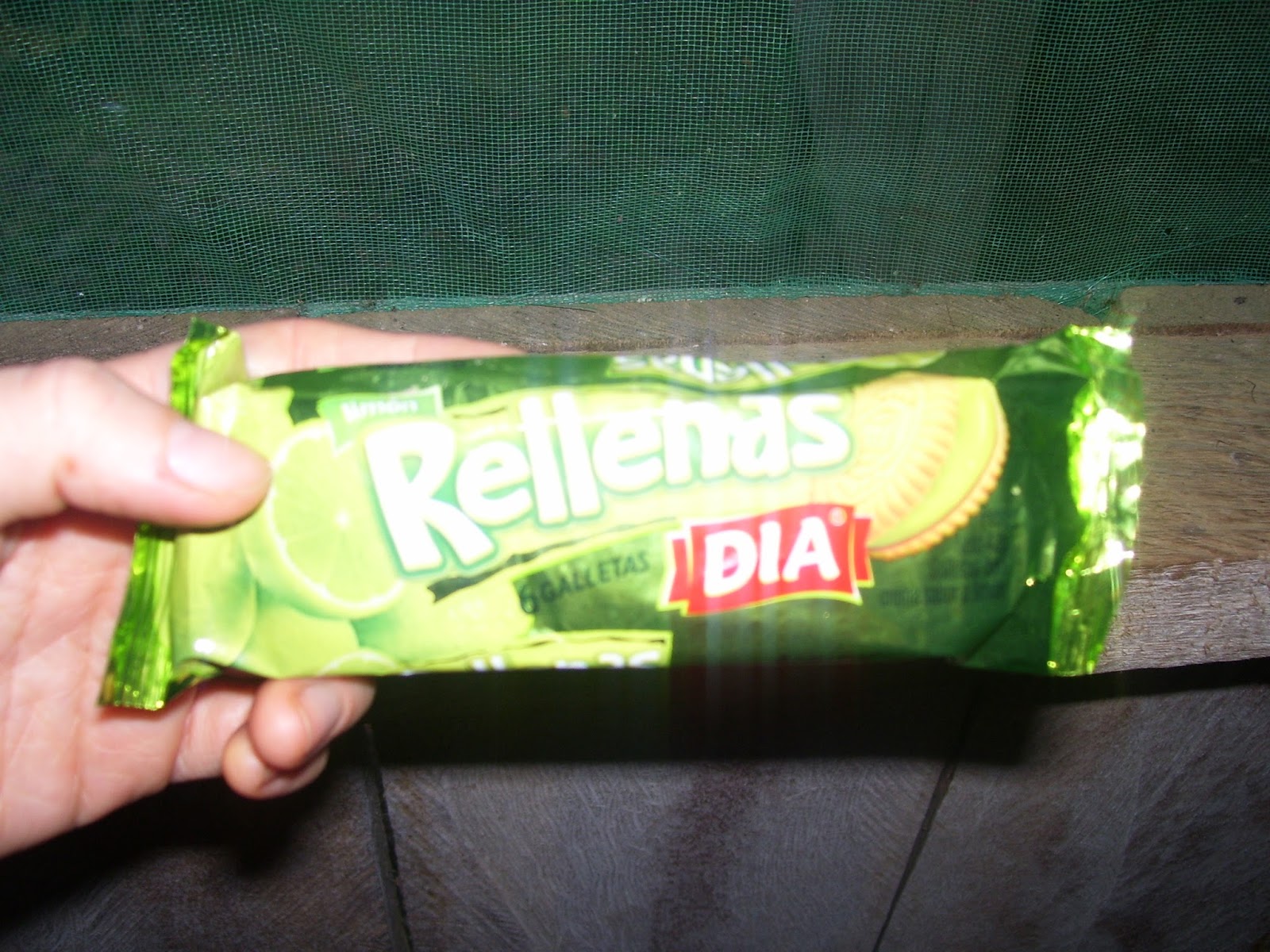
lime cookies for breakfast so I wouldn't have to cook just for
myself.
After I
studied I noticed many of the villagers were gathered in a house to
drink chicha, which I'd never heard of. Aní, one of Gustavo's
daughters who has been incredibly helpful and friendly, told me I was
welcome to join in, so I went over to see what was going on before my
class. I walked in the door and was handed a plastic bowl filled with
a milky-white liquid. I remembered the final email I'd gotten from my
father before I boarded my first flight: “Be sure to try whatever
foods they put in front of you and tell them they taste good.” My
father had lived in Manaus, Brasil, also on the Amazon River, for a
time when I was younger. (Actually, my father has lived on every
continent except Antarctica, but I'll be writing an entire entry
about him later). He hadn't lived with an indigenous tribe as I was
doing, but he'd made enough friends worldwide to have a pretty good
idea how to treat others. So, that in mind, I accepted the plastic
bowl and gingerly took a small sip. I smiled, thanked them, said it
was delicious, and asked if anyone else wanted any. The men laughed
and explained the entire bowl was for me and you are supposed to
shoot it. I wasn't entirely sure I could pull that off, but I was
determined to finish my bowl, because they had been so kind to share
with me – some strange American woman with bad Spanish who just
arrived a few days ago with their friend Ben and liked to play
guitar, and yet they were so welcoming and inviting. It took me
probably about 45 minutes, but I finished the chicha and everyone
cheered. It wasn't bad either, just a very different taste I'd never
had before. :)
I
taught my first classes beginning at 10am as agreed, and 2pm in the
afternoon. Two hours each, but it was hard because there are kids and
young adults at all different levels. They are SO eager to learn but
I'm not sure their school system prepares them well. They're good at
copying words but not at copying the translations so once I leave it
will likely be difficult for them to make sense of the words they'd
copied down. We also couldn't get into anything beyond vocabulary –
no sentence structure, no phrases. The children were somewhat shy
about speaking aloud in either language. Each class had a few
outgoing students who were proud to show off a few English words
they'd picked up, but overall I wasn't sure how helpful I'd been. I
knew I'd have to hit the books and get some more ideas for the rest
of the week. I made a mental note to ask Ben to get some markers next
time they went to Leticia. I could have used some tape,
crayons/markers and activities for the kids, and possibly some more
songs – they LOVED the alphabet song and we sang it multiple times
in every lesson.
I've
noticed the philosophy that it takes a village to raise a child is
truly alive and well here. There are plenty of teenagers but I
haven't seen nor heard a single teen scream at his or her parents.
Toddlers are everywhere and yet there haven't been any tantrums. Tiny
babies abound, but you rarely hear crying, and if you do, the crying
is easily appeased by either a breast offering food, or an older
sibling offering a hand and a hug. The children all help one another
and it's really intriguing to see in practice. Teens – including
Aní – were often seen spending most of their time watching younger
siblings while the mothers cooked and cleaned. All of the kids are
curious and imaginative because they don't have videogames or TV.
They're motivated to help and they try to figure things out. They can
make a toy out of anything – a cardboard box, a piece of a computer
motherboard, leaves from a palm tree.
That
said, there are many ways the children are universally the same.
They're all fascinated by my camera and borrow it to take photos any
time I allow (note: by the end of the trip I had over 650 photos,
many taken by the children!!) just like kids here...except, of
course, they don't have Instagram to upload everything. They love
listening to music on cell phones or clicking through photos and
music on Ben's computer. Ben's tablet has movies, games, and a
keyboard, and the teens spend hours playing with each app.
One
small moment with a very young child that stuck with me was on this
day while I was in the kitchen watching Aní cook some pan de arbol –
bread from the tree, which had a rich, nutty flavor when it was done.
A baby who could barely speak – she was at the stage of just
pointing and naming objects – pointed at me and said “¡Cantadora!”
(singer) in the kitchen. Knowing how small her vocabulary is, and
knowing I'd made enough of an impact on her to know me as the singer
made me feel like I'd definitely made the right choice in coming
here.
I was
treated with much kindness (or perhaps sympathy) in the kitchen
trying to cook for Ben, David, and myself when the men returned.
Rainforest wood is, of course, rather damp, and I had immense
troubles getting the fire hot enough to boil water for pasta. A
silent grandmother who was always nearby and always working, but
quietly, came up to me with an armful of wood after I'd pretty much
destroyed the wood already in the fire. She arrived at the perfect
time and seemed to brush off my intense gratitude as unnecessary –
she was simply doing the right thing. Shortly afterward, one of
Gustavo's daughters, a 7yr old student of mine named Estefani,
wandered into the kitchen with her 4 year old brother Angel. The two
of them saw the fire was less than fantastic, and without being
asked, adjusted the wood, blew on the flames, and got my water
boiling in no time. That kind of gave me some perspective – in my
“vida aburrida” I live on the outskirts of the biggest city in
the US, working for a world-renowned business, I have a cat, a Jeep,
and a college degree. Yet I can't build a fire well enough to make
dinner for the three of us?? I gave much credit to ancient humanity,
for being able to cook with an open fire for thousands of years, and
I also gave much credit to the villagers for continuing to be able to
do so with all of today's technological advances. Cooking is more of
a production in the village so the families usually only eat twice,
instead of three times, but still, they're far better at it than I
am, and I learned a few lessons in humility in that kitchen.
We are
looking into an organization that provides clean cookstoves for women
because the smoke from the fires is harmful to one's health, but
again, that won't be happening overnight. I do hope we're able to
make that connection though – the smoky wood made my eyes tear up
so badly and my throat feel so sore. I can't imagine cooking like
that twice a day, every day, for your entire life being very good for
your health.
The day
ended with more music, and Ben telling us scary stories at bedtime.
As long as I've known him he has been a great storyteller, but this
was the first time I'd heard scary stories in Spanish. He relayed
some tales Gustavo had once told him that still give me the creeps to
think about. I'd fill you in, but I'll let Ben tell the tales in
whichever language he chooses. :)
Subscribe to:
Posts (Atom)